
REVIEW · HANOI STREET FOOD TOURS
Hanoi: Incense Village, Conical Hat, & Street Food Tour
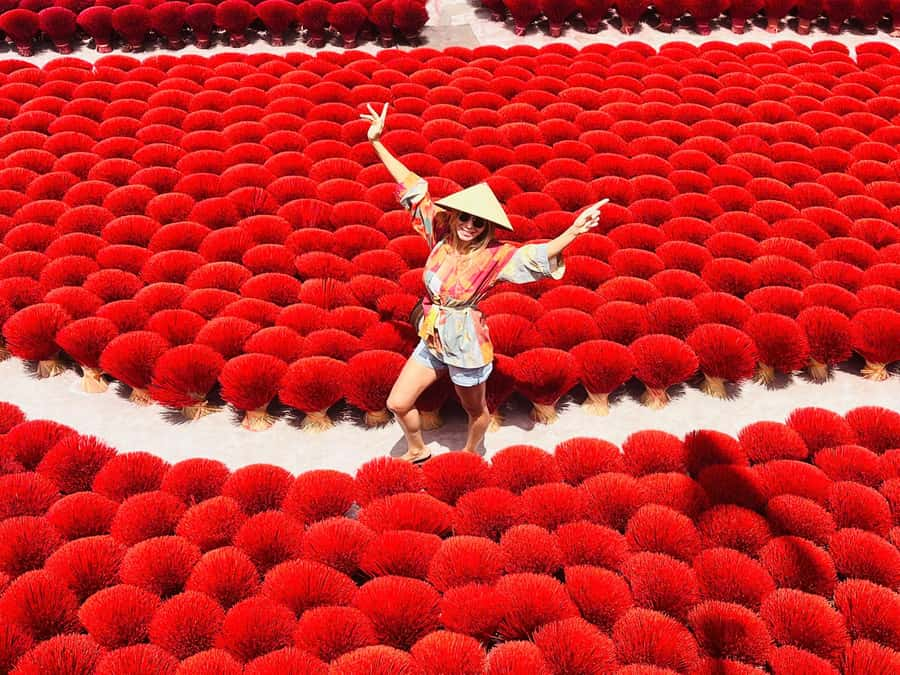
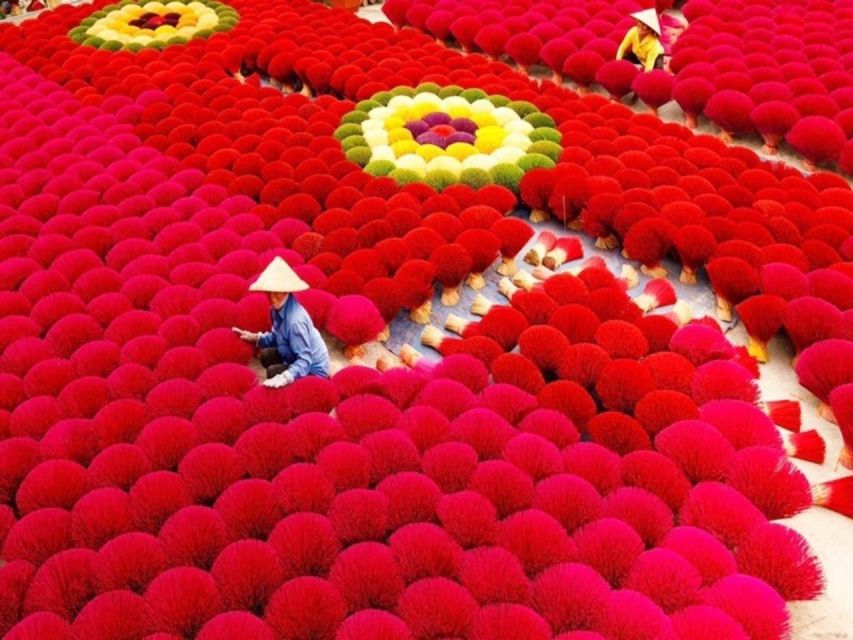
Quang Phu Cau is the star of this Hanoi day trip. Bundles of incense sticks are spread out to dry in bright, carefully arranged colors, while family workshops show you how a simple stick is made by hand. I like that the tour pairs this photogenic stop with Chuong’s 300-year-old conical hat craft, giving you two working village traditions rather than one quick photo stop.
I also like the practical hands-on touch: you paint a conical hat and take it home, and the full-day option adds local dishes such as banh cuon, kem xoi, and banh xeo. The main drawback is timing: the half-day plan includes no lunch, and the day can feel rushed if you want long, quiet time in both villages.
Key points to know before booking
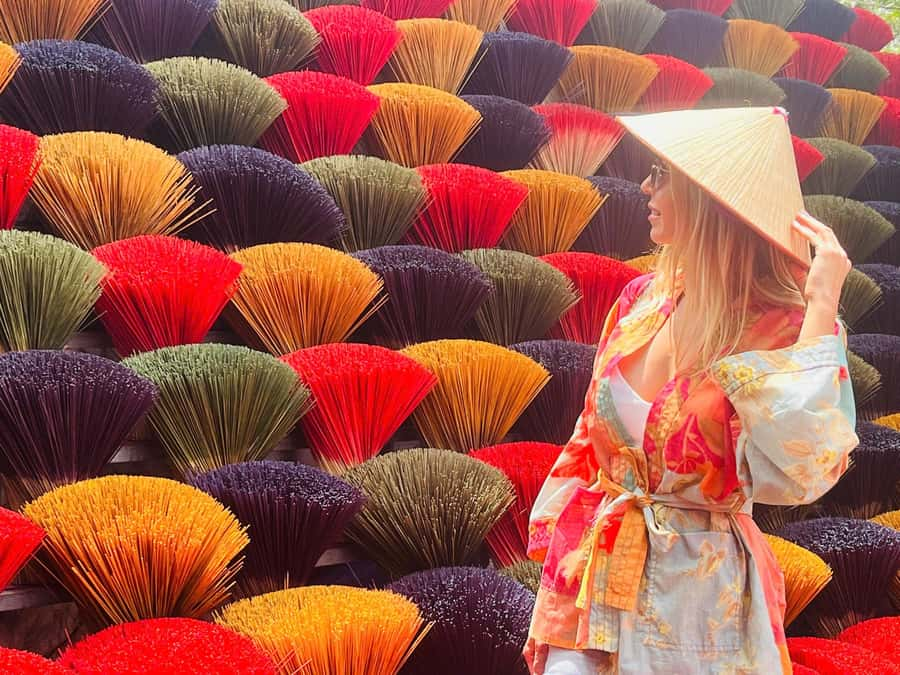
- Quang Phu Cau is made for photos: See colorful incense bundles, family-scale production, and a nearby factory.
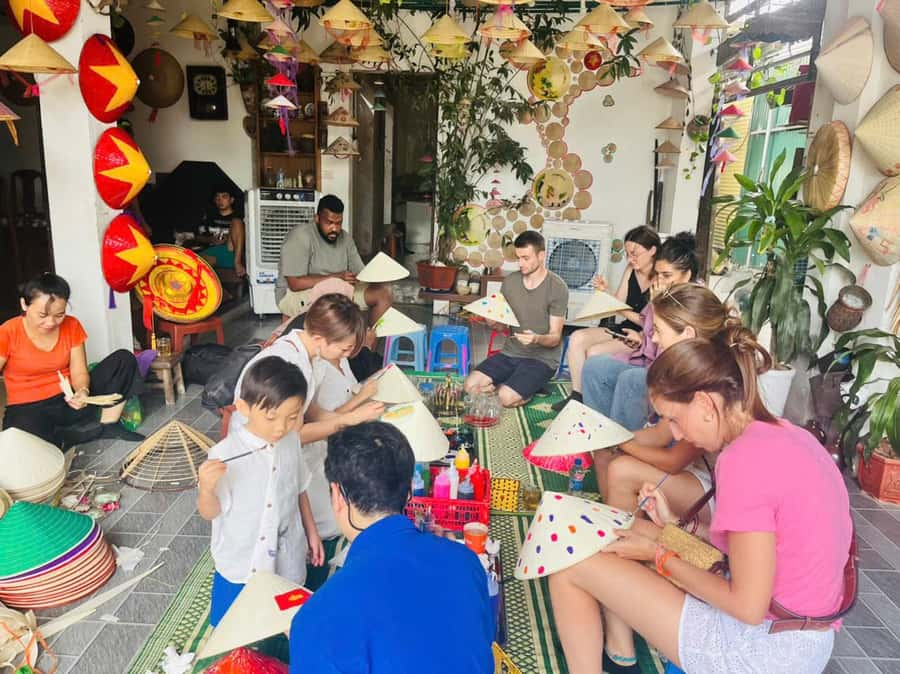
- Chuong adds a hands-on craft: Watch hat-making, paint your own conical hat, and bring it home.
- The full-day option includes food: Try banh cuon, kem xoi, banh xeo, and other local staples at family-run places.
- Train Street comes at the end: The full-day tour finishes with a drink while you wait for the train to pass.
- The price is low for what is included: At $16, you get Old Quarter transport, an English-speaking guide, entrance fees, water, and a hat.
- Anna is a guide worth requesting: She is described as energetic, thoughtful, friendly, and especially good at helping with photos and group interaction.
Why these villages make a good Hanoi side trip
Hanoi’s Old Quarter is full of noise, food, and old streets, but it does not show you much of the work that supports traditional Vietnamese life. This tour takes you beyond the city center to two villages where craft skills remain part of daily business.
The contrast is useful. At the incense village, you see a product made in large quantities but still tied to family workshops and manual work. At the hat village, the process is smaller and more delicate. You watch people shape an item that is both practical and strongly linked with Vietnam’s visual identity.
I would choose this outing if you want more than temples and city streets. It gives you direct contact with local production without requiring you to arrange transport between rural locations yourself.
The tour costs $16 per person. That is good value even on the half-day plan, since the price includes pickup and drop-off in Hanoi’s Old Quarter, an English-speaking guide, entrance fees, a bottle of water, and one conical hat. The full-day version adds the street food walk, making it an especially inexpensive way to combine craft, food, and a famous city sight.
More street food tours in Hanoi:
- Small Group Hanoi Street Food Tour with a Real Foodie
★ 5.0 · 4,682 reviews - Hanoi: Street Food Tour with Train Street & Hidden Alleyways
★ 5.0 · 2,831 reviews - Hanoi: Guided Street Food Tour with Train Street Experience
★ 4.9 · 2,479 reviews
Getting from Hanoi to Quang Phu Cau
The morning half-day departure runs from about 7:45 to 13:30. The afternoon version runs from approximately 11:45 to 17:30. The full-day tour begins with pickup between 7:45 and 8:15 and finishes around 16:15 to 16:30.
You are collected from your hotel if it is in Hanoi’s Old Quarter. Transport is by comfortable bus, which matters here because the villages are outside the central city and are not places you will want to reach by wandering on foot.
The exact order can vary slightly, but the full-day plan begins at the incense village. The drive gives you a clear change of setting from central Hanoi to a working craft community. Do not expect a museum with polished displays. You are visiting active production areas, so the appeal comes from seeing real work taking place.
Wear comfortable shoes. You will walk through village areas and production spaces, and the ground may not feel like a smooth city pavement. Pets are not allowed, and the tour is not suitable for wheelchair users or pregnant women.
Quang Phu Cau and the art of drying incense
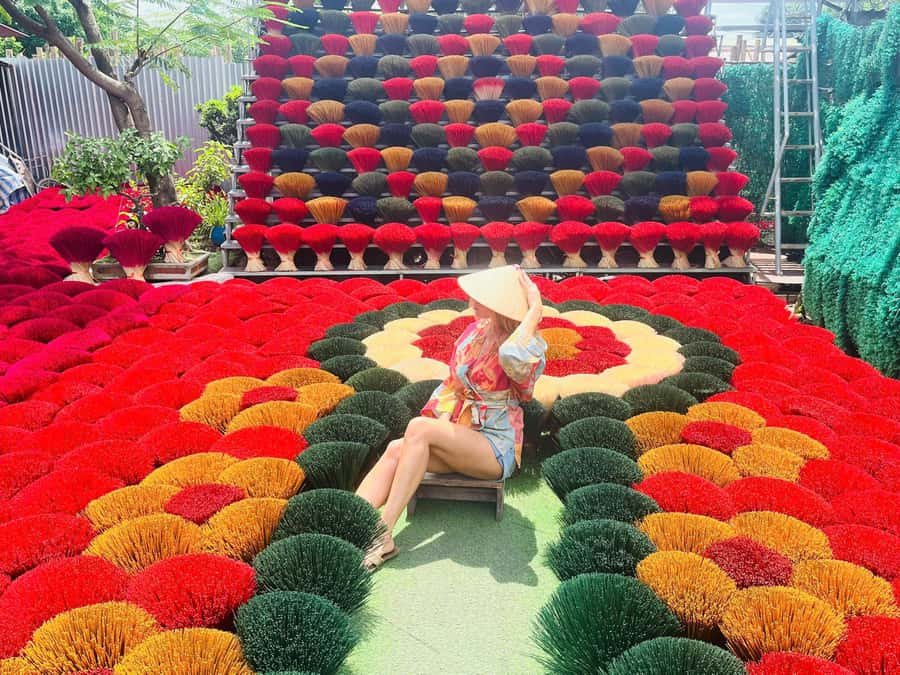
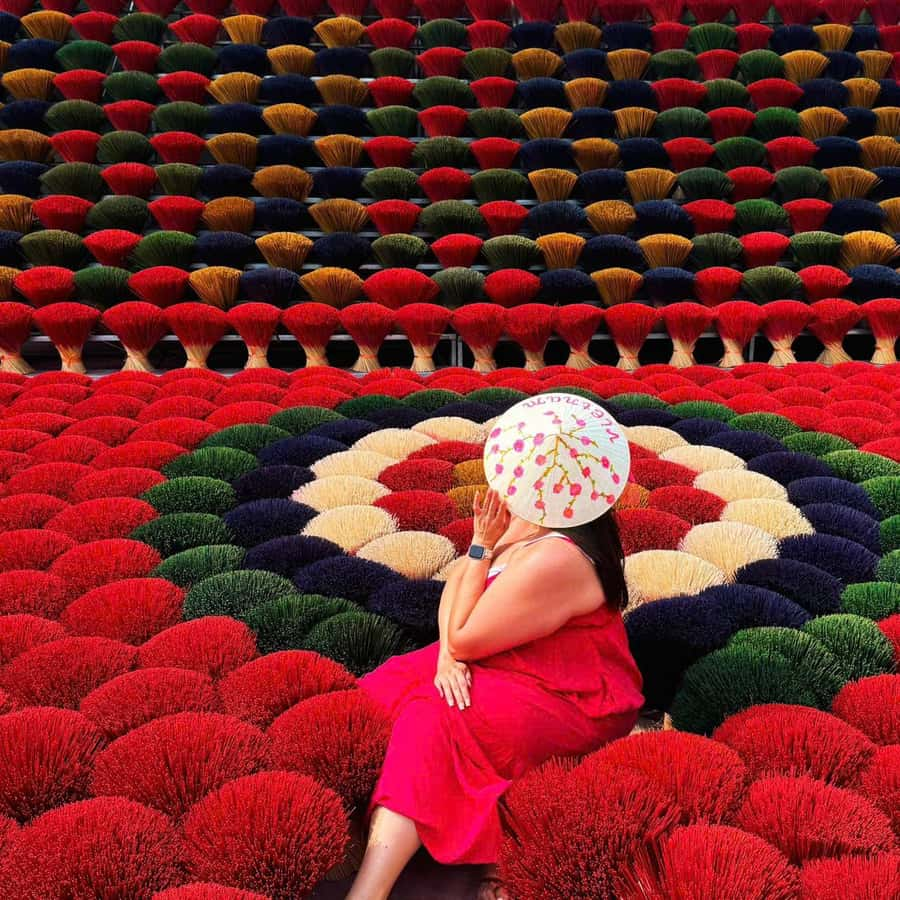
Quang Phu Cau has produced incense for more than 100 years. The first part of the visit takes you toward the center of the village, where you see how local families prepare and dye incense sticks.
The familiar image is a field of incense bundles arranged in fans or circular patterns. These displays are made for drying, but they also create the tour’s best photo opportunity. The dyed sticks bring strong color to an otherwise practical work scene, so you will want to have your camera ready before the guide moves the group onward.
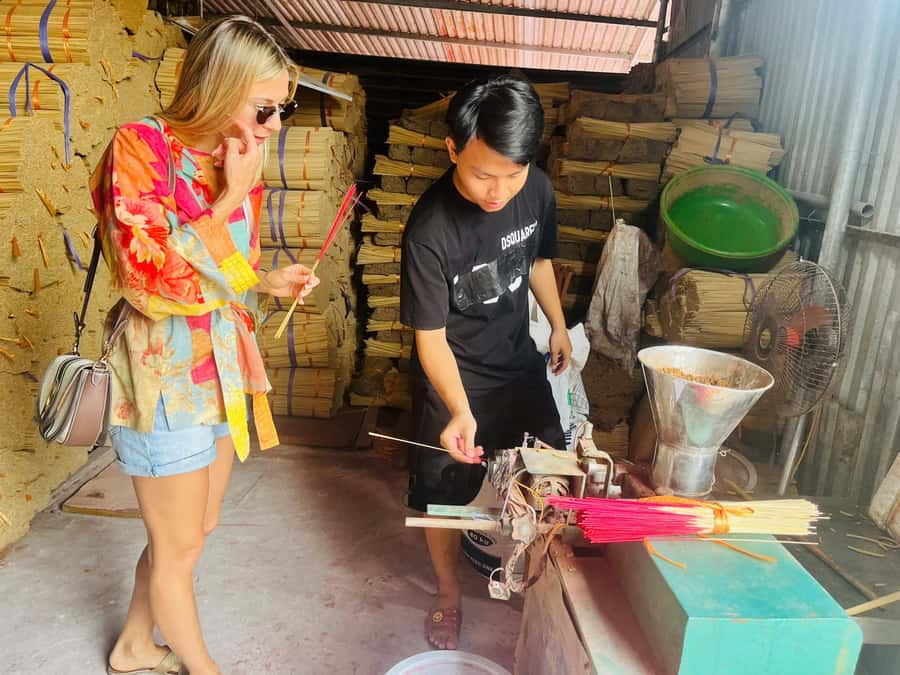
A family specializing in dyeing incense sticks gives you a closer look at this stage of production. This is one of the more useful parts of the visit because it connects the striking photos with the labor behind them. You are not only seeing colorful bundles placed for the camera. You are also learning how a family business handles one step in a long process.
The tour then continues to a nearby factory for a broader look at incense production. You learn how incense is made from the beginning and hear about the lives of manual workers. That context adds weight to the visit. The finished sticks may look simple, but making them involves repeated, physical work.
You can buy or receive incense souvenirs from the place where they are produced, depending on the arrangements of the visit. Either way, the main value is the chance to connect a familiar Vietnamese scent with the people and process behind it.
A practical note: the most colorful drying scenes can depend on the day’s production and weather. The tour promises the village, the dyeing work, and photo stops, but you should not treat every picture online as a guarantee of the exact scene you will see.
Chuong’s conical hat workshop

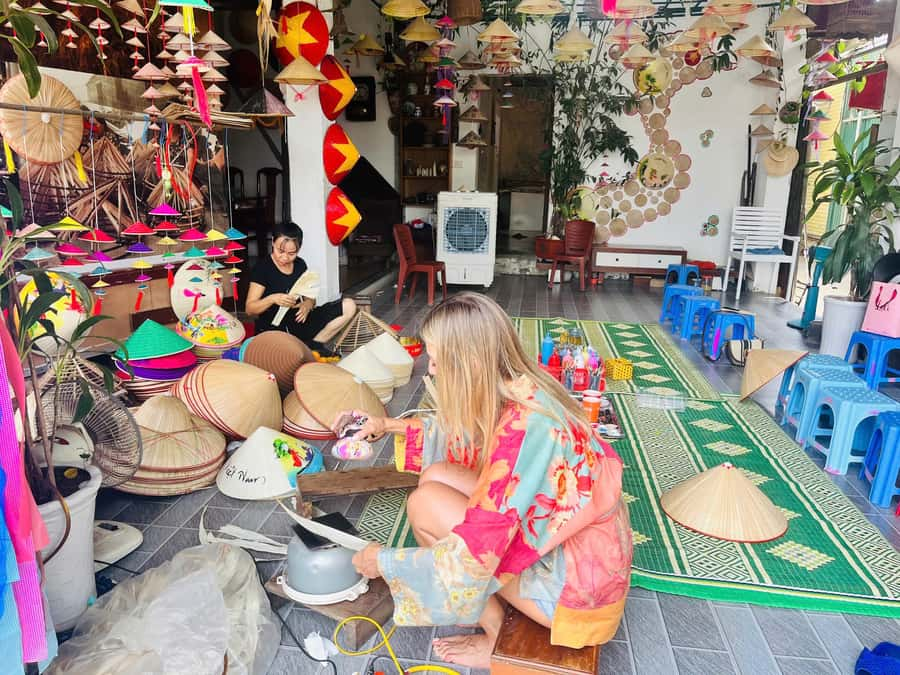
From Quang Phu Cau, the bus heads to Chuong, about 15 minutes away according to the full-day schedule. The village has been known for conical hat-making for more than 300 years.
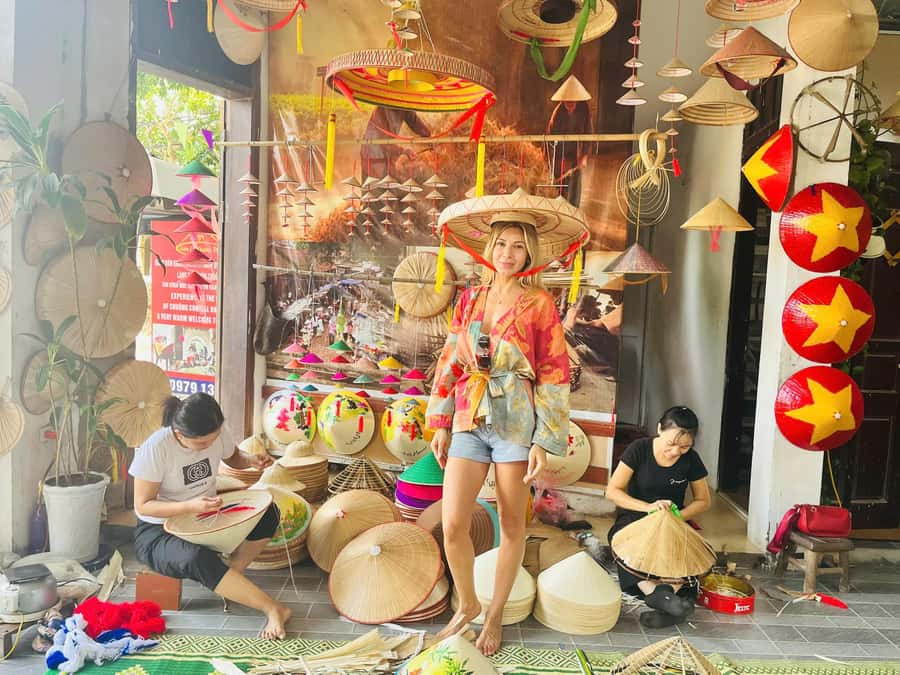
The Vietnamese conical hat, or nón lá, is more than a souvenir symbol. It is a useful piece of everyday clothing that protects the wearer from sun and rain. At Chuong, you see the skill needed to turn light materials into a hat that holds its shape.
The visit is not limited to watching. You can decorate a conical hat by painting it, then take it home. I like this feature because it gives the stop a clear purpose. You are not simply passing through a workshop, taking a few pictures, and getting back on the bus. You leave with something connected to the place.
The hat also solves a common souvenir problem. It is inexpensive, light enough to carry, and tied directly to the craft you have just seen. It may not fit easily into every suitcase, but the tour provides one hat per person as part of the included package.
The work itself is detailed, so listen closely when the guide explains the process. The point is not to become a hat-maker in one visit. It is to understand how much handwork sits behind an object that can look very simple from a distance.
Same city, another round of plates:
- [HOT] Hanoi Old Quarter Walking Street Food – Small Group Tour
★ 5.0 · 2,163 reviews - Hanoi Street Food Tour with local delicacies
★ 5.0 · 1,506 reviews - Hanoi: Small-Group Street Food Walking Tour
★ 4.8 · 1,165 reviews - Private Hanoi Street Food Walking Tour With Real Foodie
★ 5.0 · 1,042 reviews
Choosing between the half-day and full-day plans
The half-day version is best if you have limited time or want to keep your afternoon open. It visits both villages and may offer drop-off at Hanoi Train Street or at your hotel. Lunch is not included, so eat before departure or bring snacks.
The half-day schedule gives you roughly six hours. The morning option ends around early afternoon, while the afternoon option starts later and ends in the late afternoon. This makes the afternoon plan useful if you have already spent the morning exploring Hanoi, though you should think about heat and energy if you are visiting during a hot period.
The full-day plan is more satisfying if food is one of your main reasons for booking. After the two villages, you return to central Hanoi for a guided street food walk. You visit family-run places and local establishments, sampling several traditional dishes rather than stopping for one standard meal.
The trade-off is time. The full-day outing is a long day with an early pickup, bus travel, village walking, craft activity, and an afternoon food walk. I would choose it if you want one packed day that covers several sides of Hanoi. If you prefer a slower pace, the half-day plan leaves room for your own lunch and city exploring.
What you eat on the full-day street food walk
The food portion introduces dishes such as banh cuon, kem xoi, and banh xeo. These give you a good range of textures and flavors.
Banh cuon is a soft steamed rice roll, usually served with fillings and a dipping sauce. Kem xoi combines ice cream with sticky rice, making it a sweet and unusual finish. Banh xeo is a crisp savory pancake, often folded around fillings and eaten with herbs or dipping sauce.
The tour is designed for people who want food with some local context. You visit family-run places and learn about daily life as you eat. That is more useful than simply being handed a list of dishes, especially if you are not sure what to order in Hanoi on your own.
The included food walk applies to the full-day option. Other drinks and personal expenses are not included, so bring some Vietnamese dong or another accepted payment method for drinks and extra purchases.
Ending at Hanoi Train Street
The full-day outing ends at Hanoi’s famous Train Street. You have a drink while waiting for the train to pass, creating the final photo moment of the day.
This stop is very different from the villages. The incense and hat visits are about production and tradition. Train Street is a concentrated city experience, with a railway passing through a narrow built-up area and cafés close to the tracks. It is memorable, but it can also feel more staged and crowded than the village visits.
Treat the guide’s directions seriously here. You are near active railway tracks, so stay where you are told and do not step into unsafe areas for a picture. The attraction is seeing the train pass while having a drink nearby, not trying to get as close as possible.
On the half-day plan, the first drop-off is Train Street. You can choose to get off there, spend time in the area, and arrange your own taxi or Grab back to your hotel. If you do not want to visit, you can stay on the bus for hotel drop-off. Confirm your preferred option with the guide before the bus leaves.
The guide can shape the experience
The guide is important on this tour because the villages are working places rather than formal attractions. A good explanation helps you understand what you are seeing and keeps the photo stops from becoming the whole point of the day.
Anna is the guide most strongly associated with this experience. She is described as bright, thoughtful, energetic, cheerful, and friendly. She also helps people connect with one another and assists with photos, which is useful if you are traveling alone or want pictures that include you.
Guide assignments can change, so Anna may not be available on every departure. If having her lead the tour matters to you, ask the operator before booking. Regardless of who leads, look for clear explanations at the incense workshops and enough time to take part in painting the hat.
The guide also helps with the food walk. Hanoi street food can be confusing at first, and a guide gives you a starting point for dishes that you might otherwise pass by.
Who should book this Hanoi experience?
I would recommend this tour to first-time visitors who want a simple way to see craft villages outside the capital. It suits photographers, food lovers, couples, families with older children, and anyone who prefers an activity with several different stops.
It is also a good fit if you want a souvenir with a story. The painted hat and incense connect directly to the villages, unlike a generic item bought in a tourist shop.
You should think twice if you dislike early starts, long combined itineraries, or group transport. The full-day plan packs a lot into one day, and the half-day plan does not include lunch. The tour is also not suitable for pregnant women or wheelchair users.
For a more relaxed outing, choose the half-day schedule and plan your own meal afterward. For the best value and the widest look at Hanoi’s food and craft culture, choose the full-day option.
Final verdict: a strong value at $16
I would book this tour if I wanted an easy, low-cost way to get beyond Hanoi’s center. The strongest parts are the colorful incense production in Quang Phu Cau, the hands-on hat painting in Chuong, and the chance to finish with local food and Train Street.
The main caution is pace. You need to be comfortable with a full schedule, bus transfers, and walking through working village areas. If that sounds appealing, $16 buys a surprisingly broad day: transport, guide, village visits, entrance fees, water, a conical hat, and, on the full-day plan, a food walk.
Choose the half-day option for crafts and photos. Choose the full-day option if you want the most complete experience and do not mind returning to Hanoi late in the afternoon.
FAQ
How much does the tour cost?
The tour costs $16 per person.
What is included in the price?
The tour includes pickup and drop-off at hotels in Hanoi’s Old Quarter, an English-speaking guide, entrance fees listed in the plan, one conical hat per person, and one bottle of water. The full-day option also includes the street food walking tour.
Is lunch included?
Lunch is not included in the half-day tour. You should eat beforehand or bring snacks. The full-day plan includes a street food walking tour with samples of dishes such as banh cuon, kem xoi, and banh xeo, but other drinks and personal expenses are not included.
How long does the tour last?
The half-day tour lasts about six hours. The morning schedule runs approximately from 7:45 to 13:30, and the afternoon schedule runs from about 11:45 to 17:30. The full-day tour begins with pickup between 7:45 and 8:15 and finishes around 16:15 to 16:30.
Can I visit Train Street on the half-day option?
Yes. The first drop-off can be at Hanoi Train Street. You can stay there and arrange your own taxi or Grab back to your hotel, or remain on the bus for hotel drop-off.
Is the tour suitable for wheelchair users or pregnant women?
No. The tour is listed as unsuitable for wheelchair users and pregnant women. Comfortable shoes are recommended, and pets are not allowed.
Newly added plates around Hanoi
- Hanoi Vespa After Dark Street food + Train Street+ Live Music★ 5.0 · 18 reviews
- Hanoi Street Food Tour and MORE★ 5.0 · 18 reviews
- Walking Street Food Tour and Hidden Music★ 4.5 · 19 reviews
- Street Food by Walking Tour for 3 hours in Hanoi, Vietnam★ 5.0 · 26 reviews
- TASTE OF HANOI – walking street food adventure★ 5.0 · 94 reviews
- Street Food Tour Hanoi By Walking★ 5.0 · 3 reviews
- Street food on foot with a local-Asian Promise★ 5.0 · 19 reviews
- Private Street Food Tour Adventure in Hanoi★ 5.0 · 2 reviews
Hanoi Street Food Tours, compared.
Small Group Hanoi Street Food Tour with a Real Foodie
Read our review →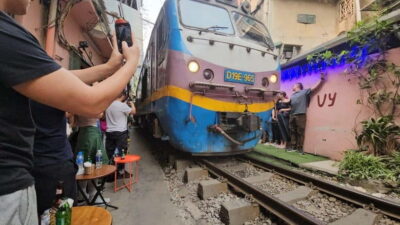
Street Food Tour with Train Street & Hidden Alleyways
Read our review →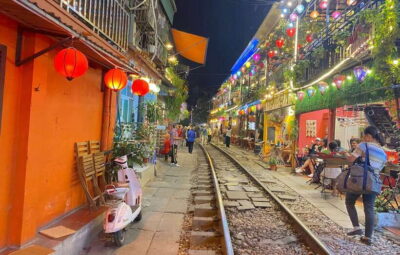
Guided Street Food Tour with Train Street Experience
Read our review →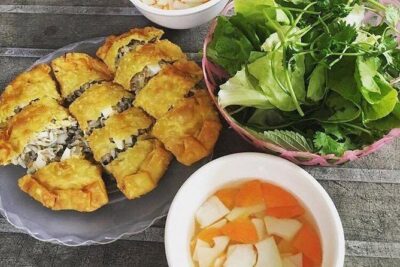
[HOT] Hanoi Old Quarter Walking Street Food – Small Group Tour
Read our review →
Private Hanoi Street Food Walking Tour With Real Foodie
Read our review →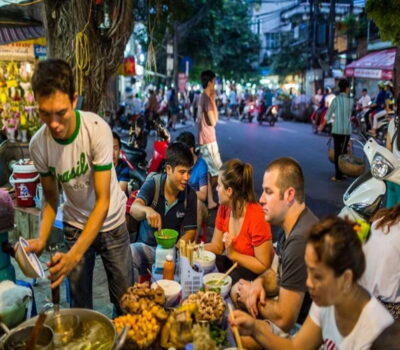
Browse the lists this tour appears in