REVIEW · TOURS
Guided Walking Street Food Tour of De Pijp & Beyond
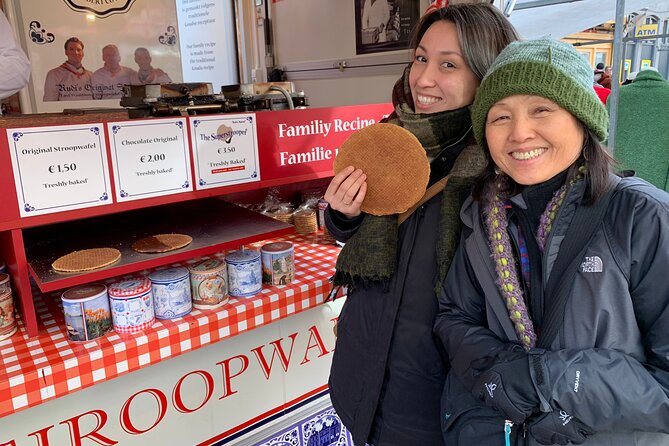
Amsterdam’s best food stories often come in small portions: a paper cone of fries, a warm croquette, a sweet stroopwafel, or a bite of Surinamese pom. This walking tour takes you through Albert Cuyp Market and De Pijp, pairing those tastes with everyday details about how people eat and shop in the city.
I like the small group of eight or fewer, which gives you room to hear the guide and ask questions. I also like the mix of Dutch classics and Indonesian, Surinamese, and Japanese food, rather than a tour built only around the usual Amsterdam clichés. The main consideration is the price, $155.68 per person, which makes this a better choice for serious food fans than for anyone seeking a cheap snack walk.
- Albert Cuyp Market provides the opening spread, with herring, kroket, broodje pom, stroopwafels, and other market foods.
- De Pijp adds local depth, from Indonesian and Surinamese toko shops to newer Japanese sandos.
- You taste at least seven foods and a few drinks, so arrive hungry and plan a light breakfast.
- The four-to-five-hour length allows for context, not just quick stops and photographs.
- Guides such as Sara and Sharmain bring different strengths, including historical food context and easy group banter.
- The tour supports small businesses and steers you away from the most obvious tourist traps.
Why De Pijp is the right neighborhood for a food walk
De Pijp gives you a useful snapshot of Amsterdam in one compact area. It is known for narrow streets, small food shops, market stalls, and a mix of Dutch and international cooking. That makes it a better setting for a food tour than a route that simply hops between famous city-center landmarks.
You will hear about ordinary life in Amsterdam as you walk. The point is not only to identify what is on your plate, but to understand why certain foods matter in the city and how neighborhood businesses fit into daily routines.
The area also makes the food feel less staged. You are not being taken from one grand restaurant to another. Instead, you move among family businesses, market vendors, small toko shops, and newer food entrepreneurs. Some stops may be quick and casual, while others give you time to look at products and ask questions.
That variety is the heart of the experience. A bite of herring represents one side of Dutch eating. Indonesian and Surinamese foods point to Amsterdam’s wider connections. A Japanese sando shows how newer food ideas now sit comfortably beside older local favorites.
Starting at Albert Cuyp Market at 11 a.m.
The tour begins at Albert Cuypstraat 75 at 11 a.m. This puts you at one of the Netherlands’ best-known street markets before moving deeper into De Pijp. The market portion lasts about 45 minutes, though the complete experience runs approximately four to five hours.
Albert Cuyp Market is a practical starting point because it brings many food traditions together in one place. You may try Dutch staples such as herring, kroket, and stroopwafel, along with foods linked to Amsterdam’s Indonesian and Surinamese communities.
A kroket is a fried snack with a savory filling, usually served in a simple handheld format. A stroopwafel pairs thin waffle layers with syrup. Herring offers a very different taste and texture, and it is one of the foods that helps you move beyond the sweet-and-fried image of Dutch street food.
Broodje pom is another notable bite. The name refers to a Surinamese sandwich preparation built around pom, a dish made with grated root vegetable and other savory ingredients. It gives the tour a wider food range than a standard Dutch snack circuit.
The market section includes both longtime family businesses and newer food sellers. That mix matters. You get a sense of the foods that have been part of the neighborhood for years, while also seeing how Amsterdam’s casual food scene continues to change.
Because this is a public market, conditions can vary by stop. You are walking, standing, and eating in an active market setting rather than sitting down for a long meal. Wear comfortable shoes and keep your schedule open after the tour, since the final stop is in a different location from the meeting point.
More street food tours in the world:
- Dubai: Old Town, Creek, Museums, Souks, & Street Food Tour
★ 4.8 · 10,816 reviews - Ho Chi Minh City Street Food Tour & Sightseeing By Motorbike
★ 5.0 · 9,413 reviews - Medellin: Comuna 13 Graffiti Tour, Cable Car & Street Food
★ 4.8 · 9,046 reviews
Three hours through De Pijp’s small food businesses
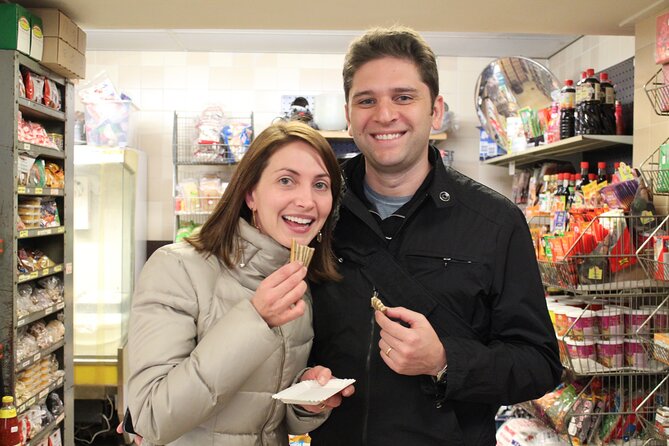
After Albert Cuyp Market, the longer portion takes place around De Pijp. This part lasts about three hours and is where the tour gains its strongest local character.
You will visit small toko shops and eateries connected with Indonesian, Surinamese, and wider Asian food traditions. These businesses may sell groceries, prepared food, snacks, or a mix of all three. For you, that means the tour can reveal products and flavors you might miss if you only visit restaurants aimed at short-term visitors.
Dutch street food remains part of the route. Depending on the stops selected, you might try fries, herring, kroket, poffertjes, or another stroopwafel. Poffertjes are small, soft pancakes, often associated with Dutch markets and casual treats.
The route also includes newer international food spots, such as places serving Japanese sandos. These are Japanese-style sandwiches, often prized for their neat presentation and soft bread. Their inclusion gives you a useful contrast with traditional market foods.
The neighborhood walk is not simply a string of food samples. Your guide also gives you a feel for Amsterdam’s daily rhythm and explains food in a historical and cultural setting. Sara, one of the guides, is described as combining food knowledge with humor and historical context. Sharmain is noted for reading the group well and keeping the conversation easy and lively.
Those details matter because a food tour can feel rushed if the guide treats every stop like a checklist. A good guide changes pace when the group needs more explanation or when a certain food deserves attention. With no more than eight people, you should have a better chance to hear the stories and take part in the conversation.
Seven or more tastings, plus drinks
The promise of at least seven local street foods and a few drinks gives the tour enough variety to function as a substantial half-day meal. You should eat a modest breakfast, but do not arrive starved. The number of samples can add up quickly, especially when fried foods and pastries are involved.
The food list includes:
- Herring
- Kroket
- Broodje pom
- Stroopwafels
- Fries
- Poffertjes
- Japanese sandos
- Indonesian and Surinamese specialties that may vary by stop
Not every item is necessarily served to every person in the same format, and the exact selection can depend on the businesses visited. Still, the range is broad enough to suit different tastes. You get salty, sweet, fried, savory, traditional, and newer international foods in one outing.
The drinks are an important part of the pacing. They break up the food samples and may give you another way to understand local habits. The supplied details do not specify the exact drinks, so you should not book this expecting a named beer, spirit, or tasting flight.
There is also an advantage to tasting small portions in different places. You can compare styles without committing to a full plate. If one stop becomes your favorite, you may want to return later for a larger order or to buy something to take home.
What the $155.68 price really buys
At $155.68 per person, this is not a budget food tour. The value depends on how you measure it.
If you only want to eat a few inexpensive market snacks, you can spend much less by visiting Albert Cuyp Market on your own. The tour price makes more sense if you want a guide to choose the stops, explain the food, connect the dishes to Amsterdam’s communities, and manage the route for four to five hours.
The small group also affects the value. A maximum of eight people is much more personal than a large walking group. You are less likely to lose the guide’s voice in a crowd, and you have more opportunity to ask about unfamiliar ingredients or return to a food you want to understand better.
The tour also directs money toward small businesses rather than relying only on major attractions. That does not automatically make the price a bargain, but it does give the experience a clear purpose. You are paying for food, guiding, time, and access to local places that may be easy to overlook.
I would consider the price fair for someone who treats food as a major part of a city visit and wants a guided introduction to De Pijp. I would skip it if you are mainly interested in landmarks, need a sit-down meal, or prefer to choose every dish yourself.
Same city, another round of plates:
- Dubai: Old Town, Souks, Street Food, Guided Tour & Abra Ride
★ 4.9 · 7,170 reviews - Naples: Street Food Walking Tour with Local Guide
★ 4.9 · 4,976 reviews - Small Group Hanoi Street Food Tour with a Real Foodie
★ 5.0 · 4,682 reviews - Rome: Street Food Tour with Local Guide
★ 4.8 · 4,077 reviews
A closer look at the guide’s role
The guide is central to this experience. The food itself is only half the reason to book. The rest comes from knowing what you are eating and why it belongs in Amsterdam’s food culture.
Sara brings a combination of food knowledge, humor, and historical explanation. That is especially useful when a dish has connections beyond the Netherlands. Indonesian and Surinamese foods are not simply extra international choices on a menu. They reflect the many communities that shape Amsterdam’s food life.
Sharmain’s strength is a different one. The group banter and ability to read the mood can make a long walking tour feel relaxed rather than overly formal. This is worth considering if you enjoy conversation and want the tour to feel social.
Guide style can never be guaranteed, and the guide assigned to your date may differ. Still, the experience is designed around personal interaction rather than a recorded audio route. You should expect to talk, listen, and move at the group’s pace.
That also means the tour may be less appealing if you want complete independence. You will follow a set route and stop where the guide has arranged food visits. The benefit is less planning. The tradeoff is less control.
Walking, timing, and practical comfort
The tour begins at 11 a.m. and lasts about four to five hours. That is a sizeable part of your day, so avoid scheduling a major timed attraction immediately afterward. The experience ends in a different location from the start, and the supplied details do not identify the exact endpoint.
You should wear comfortable walking shoes. The route includes market areas and narrow De Pijp streets, with periods of standing while eating and listening. Public transportation is nearby, making the meeting point reasonably practical to reach, though you should allow time to find Albert Cuypstraat 75.
The group size is limited to eight people. Most people can participate, and service animals are allowed. No detailed information is provided about seating, specific dietary accommodations, or the exact accessibility of every food stop, so contact the provider before booking if those details are important to you.
Confirmation is sent within 48 hours of booking, subject to availability. The tour is offered in English and uses a mobile ticket, so you can keep the booking information on your phone.
The cancellation terms are useful if your plans are still shifting. You can receive a full refund if you cancel at least 24 hours before the local start time. Changes or cancellations inside that window are not accepted for a refund, and the experience requires a minimum number of participants. If the provider cancels for that reason, you are offered another date or experience, or a full refund.
Who will get the most from this tour
I would recommend this walk to someone visiting Amsterdam for the first time who wants an introduction to the city through food rather than museums alone. It also suits returning visitors who have seen the central sights and want to spend time in a local neighborhood.
Food-curious couples, solo visitors, and small groups should fit the format well. The maximum of eight people keeps the setting intimate enough for conversation, while the guide-led route removes much of the work of finding worthwhile stops.
It is also a good match for anyone who wants to try Indonesian or Surinamese foods but feels unsure where to begin. The guide can provide context, and the small samples let you experiment without ordering a full meal at an unfamiliar place.
Families may need to think about the length and food mix. Most people can participate, but four to five hours of walking and tasting may be tiring for very young children. The supplied information does not specify a child price or a child-focused menu.
I would be more cautious if you have strict dietary restrictions. The tour includes several foods, but no detailed allergen or substitution information is provided. Ask before booking rather than assuming every stop can adapt.
Should you book the De Pijp food tour?
Book it if you want a guided half-day of eating, walking, and local context, and if $155.68 fits your Amsterdam budget. The strongest reasons are the small group, the mix of Dutch and international foods, and the chance to visit modest businesses in De Pijp rather than simply follow a standard city-center route.
The food variety is unusually broad for one outing. You may move from herring to broodje pom, from a kroket to a Japanese sando, then finish with something sweet. The guide adds the thread that ties those stops together.
Skip it if you want a low-cost market visit, a formal restaurant meal, or a landmark-focused tour. You should also plan carefully if you have limited walking ability or strict dietary needs, since the available details do not explain every stop in advance.
With a 4.9 rating from 57 submissions and a 96 percent recommendation rate, the experience has a strong record. The most useful praise centers on the guide’s personality and the way food is explained through history. That is the real reason to choose it: not just seven bites, but a clearer sense of how Amsterdam eats.
FAQ
Where does the tour start?
It starts at Albert Cuypstraat 75, 1072 CN Amsterdam, Netherlands.
What time does the tour begin?
The start time is 11 a.m.
How long does the experience last?
The tour lasts approximately four to five hours.
Where does the tour end?
It ends in a different location from the starting point. The exact endpoint is provided in the booking details.
How many people can join?
The maximum group size is eight people.
What foods might I try?
The food selection includes items such as herring, broodje pom, kroket, stroopwafels, fries, poffertjes, and Japanese sandos. Indonesian and Surinamese foods are also part of the route.
Is the tour offered in English?
Yes. The experience is offered in English.
Can I cancel for a full refund?
Yes. You can cancel at least 24 hours before the local start time for a full refund. Cancellations or changes made less than 24 hours before the start are not refunded.
Newly added plates around the world
- Zanzibar:Stone town Street food market walking tour,transfer★ 4.5 · 9 reviews
- Zanzibar: Stone town visit, Shopping tour &Night food Market★ 4.4 · 2 reviews
- Xi’an Muslim Quarter Night Market Foodie Walking Tour★ 4.2 · 22 reviews
- Xi’an: Gourmet & Street Food Tour★ 4.8 · 22 reviews
- Zanzibar: Stone town tour, Prison island & night food market★ 4.5 · 2 reviews
- Verona: Street Food and History Tour with Local Guide★ 4.7 · 6 reviews
- Vienna Food Tour: Dishes, Wine, Street Food & Culture★ 4.7 · 12 reviews
- Verona: City Highlights & Street Food Walking Tour★ 5.0 · 3 reviews
Tours, compared.
Old Town, Creek, Museums, Souks, & Street Food Tour
Read our review →
Ho Chi Minh City Street Food Tour & Sightseeing By Motorbike
Read our review →
Comuna 13 Graffiti Tour, Cable Car & Street Food
Read our review →
Old Town, Souks, Street Food, Guided Tour & Abra Ride
Read our review →
Small Group Hanoi Street Food Tour with a Real Foodie
Read our review →
Private Street Food Tour by Motorbike/Car with Local Students
Read our review →