
REVIEW · ROME STREET FOOD TOURS
Rome: Campo de Fiori & Ghetto Street Food Sightseeing Tour
Rome’s best food lesson may come served in small portions along old streets. This 2.5-hour walk links Campo de Fiori and the Jewish Ghetto with tastes of supplì, pizza al taglio, fried artichoke, cured meat, gelato, wine, and beer. You eat local dishes while the guide explains the people and events tied to the streets around you.
I like the way the route mixes food with real sightseeing instead of parking you in one restaurant. I also like the generous tastings and the chance to try dishes you might skip on your own, especially carciofi alla giudia. Guides such as Andrea and Marco have been praised for clear, engaging storytelling.
The main consideration is the menu. Vegans and people with lactose intolerance should choose another tour, while vegetarians need to request suitable food in advance. The walk also moves through narrow historic streets, so comfortable shoes and a willingness to eat on the go will help.
Key points to know before you book
- Roman classics in one short walk: Try supplì, pizza by the slice, cured meat, fried artichoke, and artisanal ice cream.
- Two historic neighborhoods: The route connects Campo de Fiori with the Jewish Ghetto and ends near Largo di Torre Argentina.
- Food and archaeology together: See Pompey’s Theater, Portico d’Ottavia, the Great Synagogue of Rome, and the sacred area at Largo Argentina.
- Drinks are part of the experience: Tastings include both wine and beer.
- Morning tours add market flavors: Expect truffle, olive oil, and balsamic vinegar tastings during the morning departure.
- A strong guide component: Andrea and Marco have both led tours praised for their Roman history, clear explanations, and easy humor.
Starting beside Giordano Bruno in Campo de Fiori
Meet at the statue of Giordano Bruno in Piazza Campo de Fiori. This is a useful meeting point because the square is easy to recognize, and Bruno himself gives the guide a natural opening for one of Rome’s more unsettling stories.
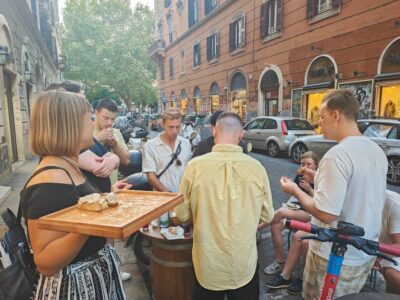
Campo de Fiori changes character during the day. In the morning, it functions as an open-air market, with food stalls and local products. Later, it becomes a place to eat, drink, and gather. The tour uses that setting well, beginning with food and then widening into stories about the square and the city around it.
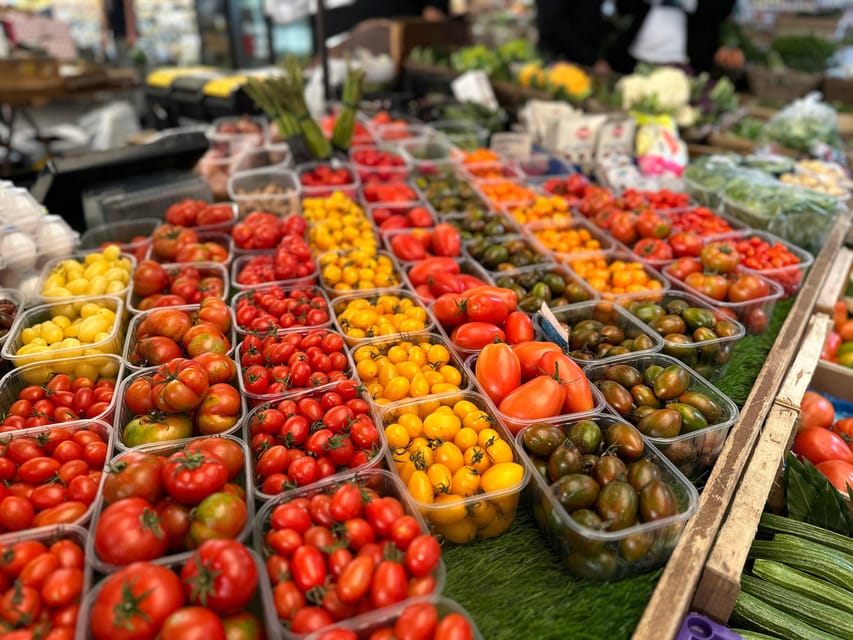
The first tasting section lasts about 15 minutes. You may sample regional products as the guide introduces the Roman food traditions that shape the rest of the walk. Morning departures include a local market visit with truffle, olive oil, and balsamic vinegar tastings. Those extras make the early start more appealing if you enjoy browsing ingredients as much as eating prepared food.
Do not expect a long sit-down meal here. This is a walking tour, and the opening stop is meant to get you tasting quickly. I would arrive hungry but not empty-stomached, especially if you are sensitive to wine or fried foods early in the day.
More street food tours in Rome:
- Rome: Street Food Tour with Local Guide
★ 4.8 · 4,077 reviews - Rome: Trastevere & Campo de Fiori Street Food Walking Tour
★ 4.9 · 2,768 reviews - Rome Street Food Tour with Local Guide
★ 5.0 · 2,361 reviews
Supplì, pizza al taglio, and a local restaurant
After only a few minutes on foot, the route reaches a local restaurant for about 20 minutes. This is where the tour begins to show why guided food walks can be useful in Rome. Instead of ordering one familiar pasta dish, you get a series of small introductions to Roman eating.
Supplì is one of the essential tastes. It is a deep-fried rice ball, often associated with Rome’s casual food culture. Its crisp outside and soft rice center make it easy to understand why it is such a popular snack. It is also the sort of food many first-time visitors fail to order because the name is unfamiliar.
Pizza al taglio follows the same practical idea. The pizza is baked in rectangular trays, cut by weight or portion, and served by the slice. The tour description calls it thin and crisp, so expect something different from a large round restaurant pizza. It is quick, inexpensive in spirit, and well suited to a walking route.
Cured meat may also appear among the tastings. Exact portions and specific products can vary, but the point is to sample ordinary Roman and Italian foods in places that serve them as part of daily life. The food stops are substantial enough that one past guide experience was described as leaving people full for the day, though appetites differ.
Wine and beer samples are included. That adds range to the meal, but it also means you should pace yourself. The tour is only 2.5 hours, and several stops still lie ahead.
Secret alleys and the Theater of Pompey
A short guided stop follows, described as a secret stop with sightseeing and a walk. That does not mean you should expect a dramatic private site or an undisclosed admission. Think of it as a less obvious corner, passage, or view where the guide can connect the street to Rome’s past.
The route then reaches a local bakery for another 15-minute stop. Bakeries are useful places to see how Roman food works outside formal dining. You get a quick taste, a look at the setting, and a chance to ask the guide what belongs to the city’s everyday menu.
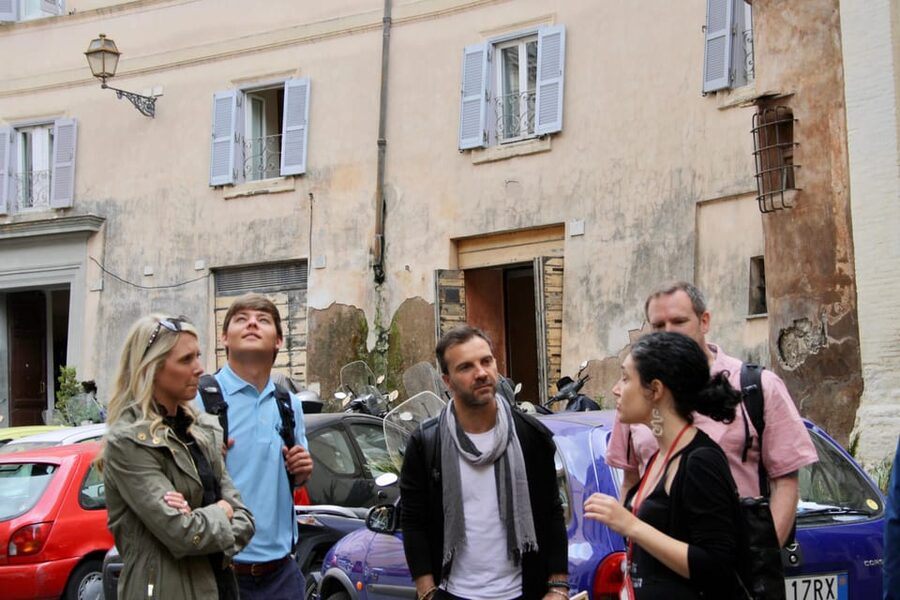
From there, the walk continues along Via dei Chiavari. The route is short, with scenic views along the way, but this is also where the food and architecture begin to blend. Rome is often most interesting between the famous monuments, when a narrow street suddenly opens onto a fragment of ancient stone or an old building façade.
The Theater of Pompey receives its own sightseeing stop. Julius Caesar was killed at the Curia of Pompey in 44 BC, and the guide uses this area to explain the Roman political world surrounding the assassination. The tour does not promise an interior visit, so you should think of this as an outdoor historical stop rather than an archaeological entry.
That distinction matters. If you want long museum visits or carefully labeled ruins, this tour will feel light. If you like seeing a place, hearing its story, and then moving on for another bite, the pace works well.
Fried artichoke in the Jewish Ghetto
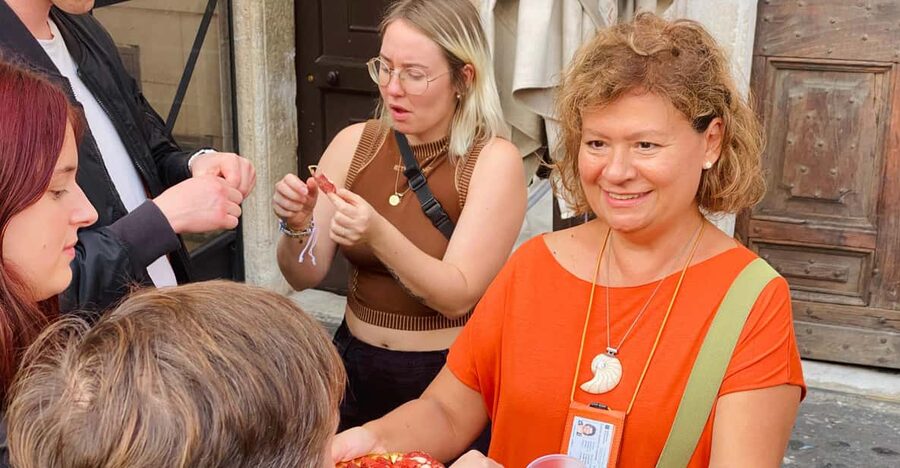
Another local restaurant stop lasts about 15 minutes before the walk enters the Jewish Ghetto. The food focus shifts toward one of the area’s signature dishes, carciofi alla giudia, or Jewish-style fried artichoke.
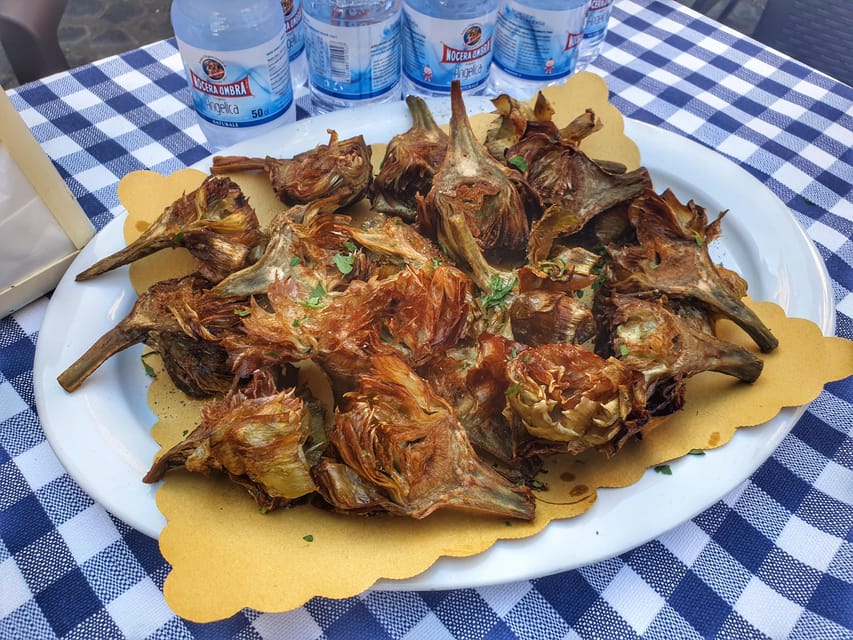
The artichoke is prepared by flattening and frying it until the leaves become crisp. It is a memorable dish because the texture is as important as the flavor. You eat more than a vegetable here. You get a direct connection between Rome’s food traditions and the long Jewish presence in the city.
The Jewish Ghetto stop lasts about 15 minutes and includes a guided walk. The guide explains the area’s past, and you can expect the conversation to move beyond food into the restrictions, communities, and changes that shaped this part of Rome. This is one of the tour’s strongest features: food gives you a reason to enter the neighborhood, while the stories give the meal a setting.
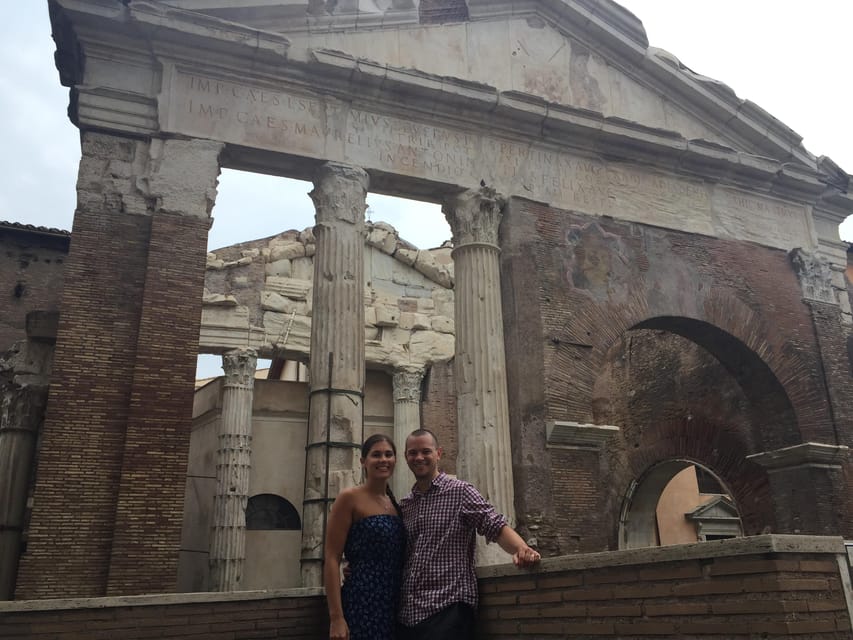
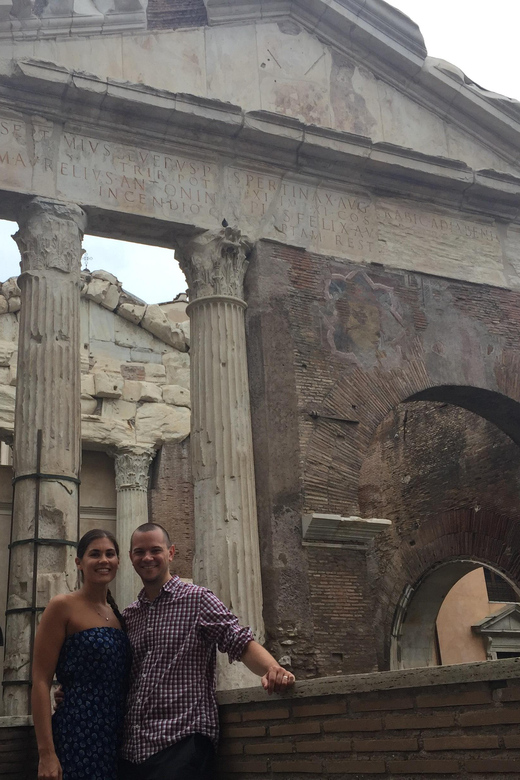
The Portico d’Ottavia follows. These ancient remains provide a clear reminder that Rome’s layers are packed tightly together. Roman ruins, medieval streets, religious buildings, shops, and restaurants can occupy the same few blocks.
The tour then passes the Great Synagogue of Rome, with about five minutes for the walk and exterior viewing. The schedule does not include entry, so do not book this expecting an indoor synagogue visit. Still, seeing the building within the Ghetto helps connect the area’s religious and civic identity to the surrounding streets.
Same city, another round of plates:
- Rome: Trastevere Street Food Walking Tour with Local Expert
★ 4.8 · 1,784 reviews - Roman Food Tour with Visit to the Trionfale Food Market
★ 5.0 · 471 reviews - Trastevere & Campo de’ Fiori Street Food Tour, Eat Like a Local
★ 5.0 · 207 reviews - Hidden Rome: Small Group E-Bike Tour with Street Food Stops
★ 5.0 · 169 reviews
Gelato near Largo Argentina
The last food stop takes place at another local restaurant before you walk toward Largo di Torre Argentina. This section gives you time to finish the savory side of the tour before dessert.
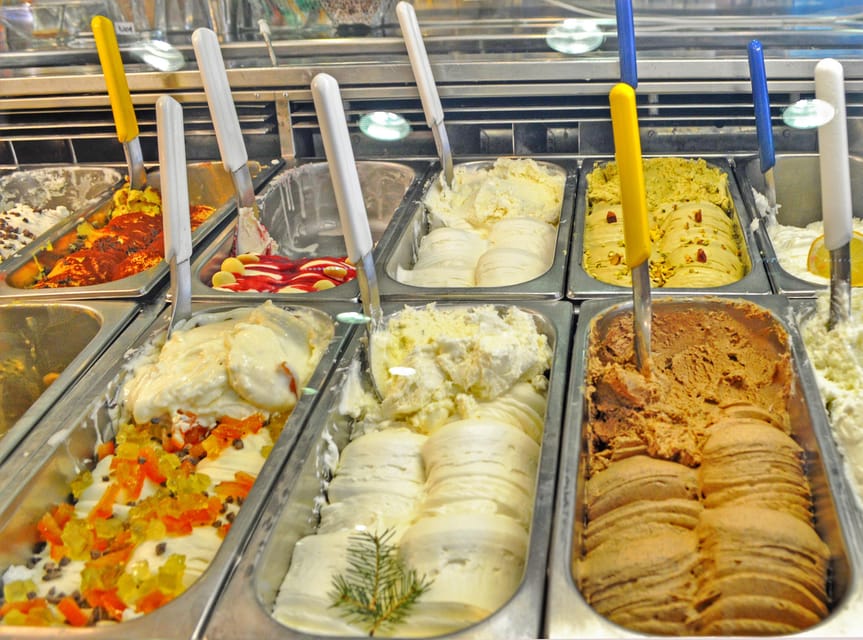
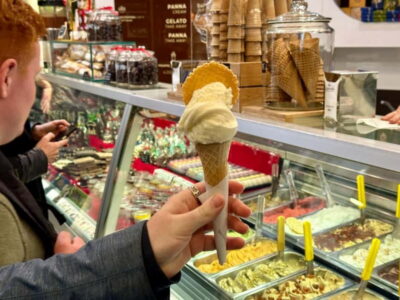
The route ends at the sacred area of Largo Argentina, where the dessert stop lasts about 10 minutes. Here, the reward is artisanal ice cream. Gelato is an obvious Roman finish, but it also serves a practical purpose: after fried foods, cured meat, and pizza, something cold and sweet resets the palate.
Largo Argentina is a fitting endpoint. The archaeological area is tied to the assassination of Julius Caesar, and it gives the guide one more chance to connect Roman politics, ancient ruins, and modern city life. The tour description refers to the area as an archaeological sacred area, and the final setting helps pull together the earlier references to Caesar and Pompey.
You should expect a compact outdoor introduction, not a full archaeological site visit. The route gives you views and context from the streets around the ruins. If you want to spend an hour studying every stone, plan a separate visit.
What the food portions and price mean
At $41 per person, the tour offers fair value if you use the food as part of your lunch or dinner. You receive several tastings, wine, beer, a guide, and a historical walking route. Buying every item separately could cost a similar amount, but the bigger benefit is variety and guidance.
The value is strongest for first-time visitors who want help deciding what to taste. Supplì, pizza al taglio, fried artichoke, cured meat, and gelato are easy to understand once someone explains them, but less obvious when you are reading a menu alone.
The price is less compelling if you want a full restaurant meal or large drinks. Additional food and drinks are not included, and the tour is built around samples rather than a single generous entrée. Still, the food portions have been described as generous, and one guide-led outing was enough to keep someone full for the day.
The guide matters greatly here. Andrea has been praised for making Roman and Italian history easy to follow without losing detail. Marco has also been praised for explaining food, architecture, and Rome’s past in an engaging way. Guides can change, so you should not assume either person will lead your departure, but their style gives you a useful idea of the standard this experience aims for.
Pace, dietary limits, and the best departure time
The route is divided into many short stops. Several walks last only two to four minutes, while the food and sightseeing sections generally run from five to 20 minutes. That keeps the outing moving, but it also means you will not linger long at each place.
I would choose a morning departure if you like markets and ingredient tastings. The morning version includes truffles, olive oil, and balsamic vinegar at the local market. A later departure may suit you better if you prefer the social feel of Campo de Fiori after the market period, but the supplied details do not specify exact starting times or how the food selection changes during the day.
The tour is not suitable for vegans or people with lactose intolerance. Vegetarians can be accommodated if you request options in advance. Do that before arriving, since the route includes several dishes built around meat, dairy, or frying.
This is also not a tour for someone who dislikes walking between bites. The itinerary is entirely on foot, with narrow historic streets and several stops spread across Campo de Fiori, Via dei Chiavari, the Theater of Pompey, the Jewish Ghetto, and Largo Argentina.
Who should book this Rome food walk
I would choose this for a first or second visit to Rome, especially if you want a quick introduction to Roman food without giving up sightseeing. It suits curious eaters who want context with their meal and prefer a guide to explain what they are tasting.
Families with older children may find the short stops easier than a long formal meal, though the schedule and food style may not suit very young children. Couples and solo visitors can also benefit from the social rhythm of tasting and walking, particularly if they want a focused afternoon or morning activity.
You should skip it if you need a fully seated meal, avoid fried food, cannot eat dairy, or want extensive access to monuments. You should also look elsewhere if your main goal is a market shopping tour, since the market tasting is specifically noted for morning departures and the main experience is a broader food and history walk.
Should you book the Campo de Fiori and Ghetto tour?
Book it if you want a practical Roman food primer tied to real neighborhoods and major historical points. The combination of supplì, pizza, fried artichoke, wine, beer, and gelato gives you a broad taste in a short time, while the route adds Pompey’s Theater, the Jewish Ghetto, Portico d’Ottavia, and Largo Argentina.
I especially recommend it for visitors who want help ordering unfamiliar foods and appreciate a guide who can explain history in plain language. The main limits are dietary, the walking pace, and the fact that the monuments are viewed from outside rather than visited in depth.
With free cancellation up to 24 hours before the tour and a reserve-now, pay-later option, the booking terms are flexible. If the menu suits you and you can spare 2.5 hours, $41 is a sensible way to get oriented to both Roman food and the streets where the city’s past remains close at hand.
FAQ
Where does the tour begin?
The meeting point is at the Giordano Bruno statue in Piazza Campo de Fiori.
Where does the tour finish?
The tour finishes at the Area Sacra di Largo Argentina.
How long does the experience last?
The walking food tour lasts 2.5 hours.
What food can I expect to taste?
Tastings include supplì, pizza al taglio, cured meat, fried artichoke, and artisanal ice cream. The tour also includes regional food stops at local restaurants and a bakery.
Are drinks included?
A wine sample and a beer sample are included. Additional food and drinks are not included.
Can vegetarians join?
Yes, vegetarian options are available when requested in advance.
Is the tour suitable for vegans or people with lactose intolerance?
No. The activity is not suitable for vegans or people with lactose intolerance.
Newly added plates around Rome
- Vegan Street Food Tour in Rome★ 5.0 · 6 reviews
- Testaccio Street Food Tour Eat Like a Local★ 3.5 · 2 reviews
- Tasty Trastevere Street Food Tour in Rome from Tiberine Island to Ponte Sisto★ 5.0 · 25 reviews
- Vatican Street Food Tour and Wine Experience with Local Guide★ 5.0 · 7 reviews
- Gems of Rome: Small group E-bike tour with street food stops★ 5.0 · 36 reviews
- Tasty Rome Street Food Tour around Campo de’ Fiori Market & Jewish Ghetto★ 5.0 · 2 reviews
- Small-Group Rome Street Food Guided Tour★ 5.0 · 15 reviews
- Rome Street Food Tour – History, Craft and Authentic Taste★ 5.0 · 25 reviews
Rome Street Food Tours, compared.
Trastevere & Campo de Fiori Street Food Walking Tour
Read our review →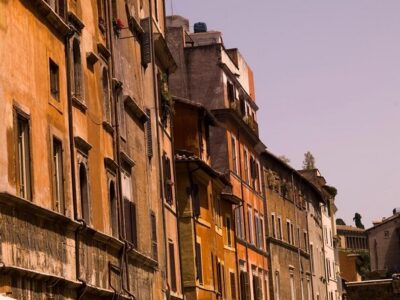
Trastevere Street Food Walking Tour with Local Expert
Read our review →
Roman Food Tour with Visit to the Trionfale Food Market
Read our review →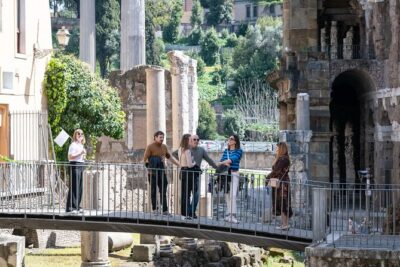
Trastevere & Campo de’ Fiori Street Food Tour, Eat Like a Local
Read our review →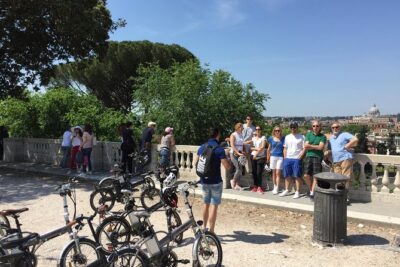
Hidden Rome: Small Group E-Bike Tour with Street Food Stops
Read our review →Hidden Rome: Small Group E-Bike Tour with Street Food Stops
Read our review →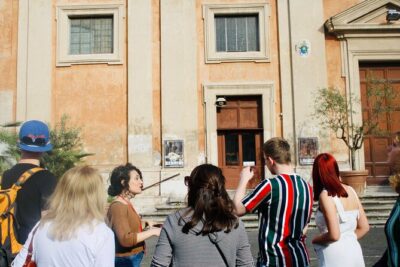
Browse the lists this tour appears in