REVIEW · TOURS
La Paz: Street Food Walking Tour
La Paz: Street Food Walking Tour turns the city center into a moving meal. You start near Jaen Street, visit markets and major squares, and taste Bolivian food at several stops along the way. The green umbrella is your meeting-point clue, and the tour begins at 2 p.m. in English.
I like the route for two clear reasons: food and city history arrive together, and the tastings take place in ordinary markets rather than polished tourist restaurants. I also like the human side of the experience. Guides Erwin, Christian, and Chris have been praised for explaining local customs, adapting to guests, and helping with practical problems such as altitude sickness.
The main concern is serious: two recent bookings reported that the guide never arrived, along with poor provider communication and one double charge. The food and guiding can be excellent, but I would book only with free cancellation and confirm the meeting details shortly before the start.
Key points to know before booking
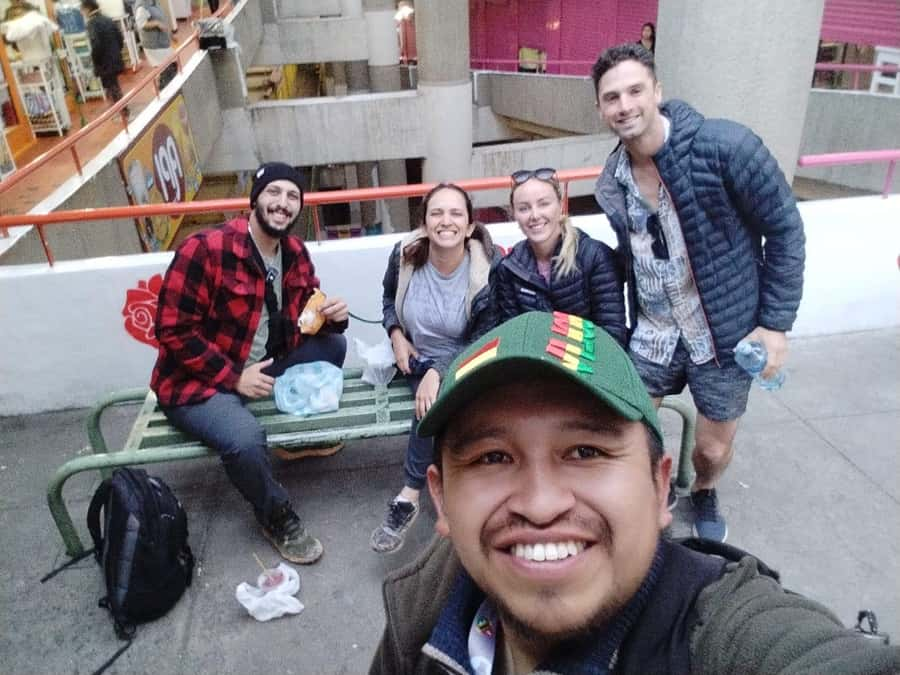
- Six central La Paz stops: The route links Riosinho Square, Lanza Market, Murillo Square, San Pedro, Rodriguez Market, the Witches Market, and San Francisco Church.
- A four-hour walking tour: The afternoon start is 2 p.m., with the tour conducted in English.
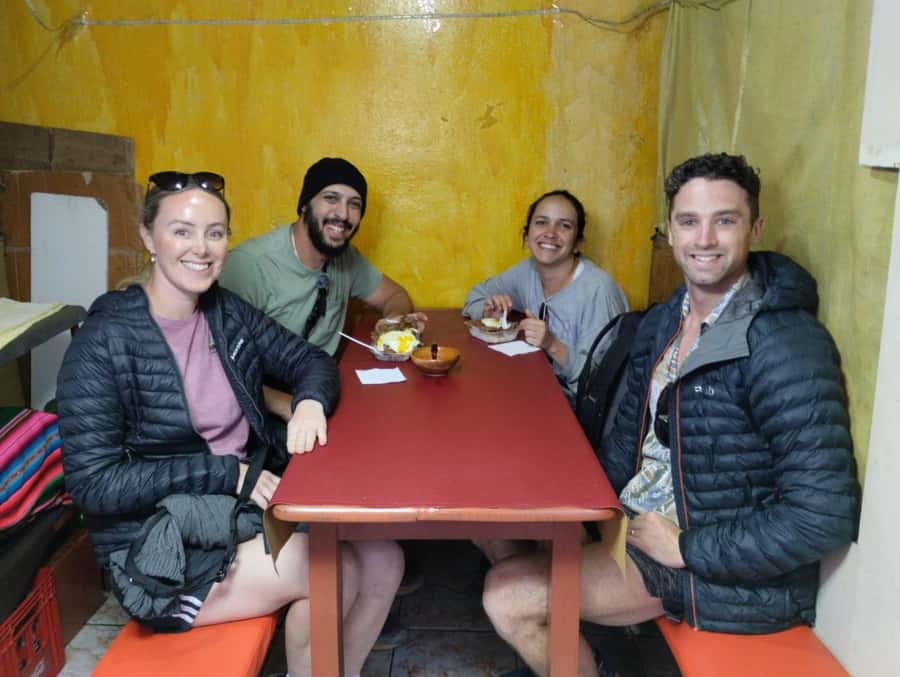
- Food is central to the experience: You receive several Bolivian tastings, including a drink and dishes from markets and street-food areas.
- Guides make a major difference: Erwin, Christian, and Chris have received strong praise for personal attention and local explanations.
- Not designed for vegetarians: The operator says the tour is available only for carnivorous people because most tastings are meat-based.
- Reliability needs attention: Two recent bookings reported no-shows, so keep cancellation protection and verify the appointment.
Starting beneath the green umbrella near Jaen Street
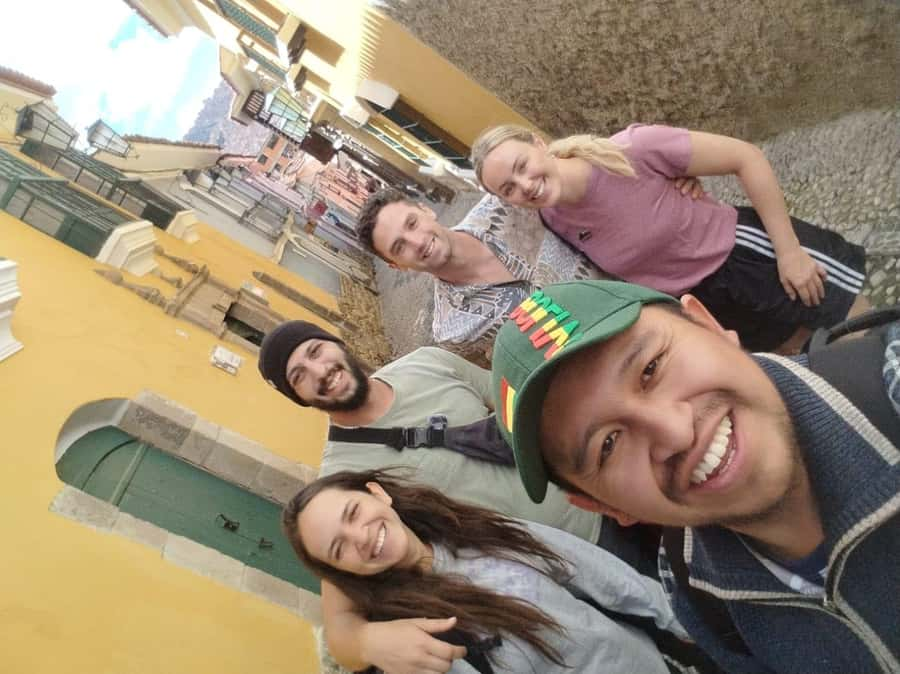
The meeting point is Riosinho Square, close to Jaen Street, one of La Paz’s best-known colonial streets. You are told to look for the guide with the green umbrella. That detail matters in a city where a busy square and a vague meeting point can create needless stress.
The start time is 2 p.m. for the English tour. Arrive early enough to find Riosinho Square and identify the umbrella before the group sets off. Since the tour lasts about four hours, you should finish around early evening, although the exact end time can vary.
Jaen Street gives you an immediate sense of the older city center, but the tour is not simply a history walk. The point is to connect places, people, food, and daily life. You move through central La Paz on foot, so comfortable shoes are essential.
The clothing advice is practical. La Paz weather can shift quickly, so bring a jacket or pullover, an umbrella, and clothing for warmer conditions. Sunscreen, sunglasses, water, snacks, and a camera are also recommended. The snacks may seem odd on a food tour, but the tastings are spaced across several hours and may not suit every appetite.
More street food tours in the world:
- Dubai: Old Town, Creek, Museums, Souks, & Street Food Tour
★ 4.8 · 10,816 reviews - Ho Chi Minh City Street Food Tour & Sightseeing By Motorbike
★ 5.0 · 9,413 reviews - Medellin: Comuna 13 Graffiti Tour, Cable Car & Street Food
★ 4.8 · 9,046 reviews
Lanza Market and the first Bolivian drink
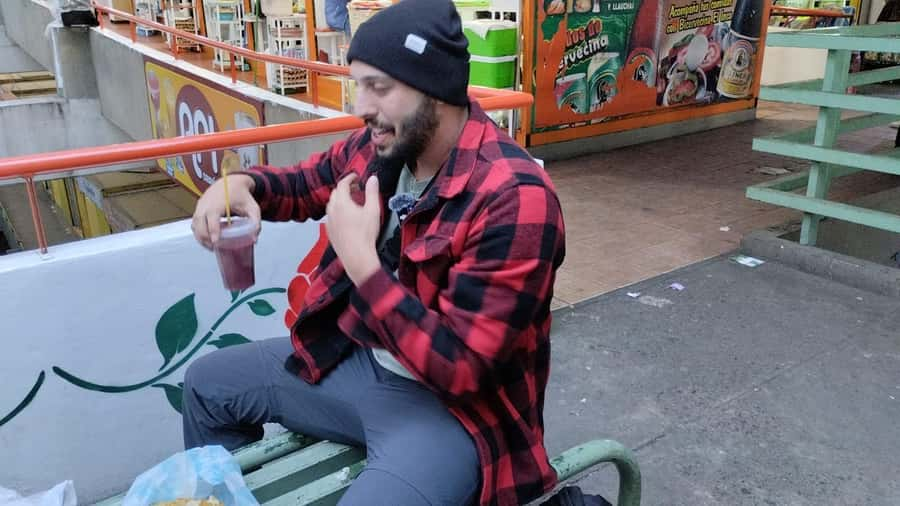
The first major stop is Lanza Market, where you learn more about La Paz while trying a traditional Bolivian drink. Markets are useful starting points because they show the city in working mode. You are not just looking at old façades or hearing dates. You are seeing where food is bought, prepared, and served.
The drink gives the guide a natural way to explain local tastes and habits. The exact drink is not specified, so you should not book expecting one particular recipe. The useful question to ask at the start is what you are tasting, how it is normally served, and whether it contains ingredients you need to avoid.
Lanza Market may also be the first point where altitude affects your appetite. La Paz is high, and one guest with altitude sickness needed medication from a pharmacy during a tour. Guide Christian helped with that problem, which shows the value of having a person who can assist beyond simply naming dishes.
Still, do not treat the guide as medical support. If you feel unwell, tell the guide early and take the symptoms seriously. Water, a steady pace, and a light approach to tasting are sensible.
Murillo Square and the city story
From the market, the route moves toward Murillo Square, the city’s main square. This is one of the places where the historical side of the tour comes forward. The guide explains La Paz and its past while you move between food stops.
A street-food tour can easily become a list of snacks with little context. Murillo Square helps prevent that. You get a clearer idea of how the center is organized and why these markets and streets matter to the city.
The stop is also useful for orientation. If you are new to La Paz, the square gives you a central reference point before the walk continues. You can ask the guide about the buildings and public spaces you pass, though the supplied information does not promise a formal architectural tour or a set amount of time here.
The route is best for people who enjoy learning while walking. It is less suitable if you want to sit down for a long meal at one restaurant. This is a sequence of tastings, city stops, and short explanations.
San Pedro and the tour’s most unusual stop
The walk then heads toward San Pedro, described as a particular prison. The tour does not mean a standard prison visit, and you should not assume entry inside the facility. The stated experience is a stop connected with San Pedro where you taste another typical Bolivian dish.
This is one of the route’s more unusual details. A prison-related landmark gives the guide a chance to discuss an aspect of La Paz that does not appear on a standard sightseeing circuit. It also breaks up the usual pattern of churches, plazas, and souvenir streets.
Because the exact food is not named, ask the guide what you are eating and how it relates to the area. That small explanation can turn a quick sample into a useful local lesson.
Keep your expectations sensible. The tour description calls the dish typical, but it does not promise a sit-down restaurant, a full portion, or a particular style of preparation. The value lies in trying food linked to the city’s everyday culture while hearing the story behind the stop.
Same city, another round of plates:
- Dubai: Old Town, Souks, Street Food, Guided Tour & Abra Ride
★ 4.9 · 7,170 reviews - Naples: Street Food Walking Tour with Local Guide
★ 4.9 · 4,976 reviews - Small Group Hanoi Street Food Tour with a Real Foodie
★ 5.0 · 4,682 reviews - Rome: Street Food Tour with Local Guide
★ 4.8 · 4,077 reviews
Rodriguez Market, where produce becomes part of the lesson
Next comes Rodriguez Market, a popular market for vegetables and fruit. This changes the rhythm of the walk. After a drink and a prepared dish, you see the raw ingredients that support local cooking.
Markets also give you a better sense of scale. You can compare the produce stalls with the prepared-food areas visited earlier and ask how ingredients are used at home or in local kitchens. The guide’s explanation matters here, and the strongest guide feedback describes people who explain not only food but also customs and table manners.
The route does not state exactly what tasting happens at Rodriguez Market. You might receive a fruit or another sample, but do not count on a particular item. Think of the stop as part market visit, part food lesson, and part chance to watch daily commerce.
You should also expect sensory overload in a practical sense: changing smells, uneven walking surfaces, crowds, and many visual details. Keep your belongings secure and follow the guide’s instructions. That advice is not a special rule for this tour; it is simply good market practice.
The Witches Market and a more unusual side of La Paz
The Witches Market is the next named stop. It is one of the city’s most distinctive attractions, and the tour adds another food tasting here. The combination is useful because you are not visiting only for photographs. You get a chance to ask what you are seeing and then connect the stop with local food.
The name can sound more dramatic than the visit itself. The experience described here is a guided walk through the market, not a guaranteed ritual or private demonstration. The guide is important because context keeps the stop from becoming a quick look at unusual objects.
This part of the route should suit you if you like places that feel different from conventional museums. It may not suit you if you prefer a quiet, carefully arranged attraction. The market is one of the more informal stops, and the pleasure comes from observing, asking questions, and trying the food.
The tour’s description uses enthusiastic language for each tasting, but portions and dishes are not specified. Treat the meal as a series of small encounters rather than a fixed menu. If you have allergies or strong dislikes, speak up before accepting anything.
San Francisco Church and the final tasting
The walk closes at San Francisco Church, one of the central landmarks named in the route. The final tasting takes place here, giving the group a last food moment before the tour ends.
Ending at a major church is practical. It leaves you in a central part of La Paz, rather than at an isolated restaurant or distant neighborhood. The description does not state the exact end point beyond the church or whether the guide continues after the final sample, so ask if you need precise onward directions.
This final stop also gives you a chance to review the day. You have moved from a city square to markets, a prison-related landmark, a produce market, the Witches Market, and a major church. That mix is the tour’s main strength. It gives you more than a tasting menu, but it does not pretend to be a full formal sightseeing program.
What the guides add to the experience
The guide can make or break this tour. Erwin received strong praise for explaining La Paz, daily life, and local food while responding to individual wishes. Christian was praised for patience, for helping with altitude sickness, and for showing the main downtown sights and their history.
Chris has also been praised for explaining Bolivian dishes, table customs, and social habits. That is especially useful if you want to understand how food fits into local life rather than simply collect samples.
There is also a safety benefit in having a guide who knows the center. A pair of women specifically felt comfortable walking with Chris and appreciated his local contacts. That does not guarantee the same guide or the same group on your date, but it shows the kind of personal service the tour can provide when operations go well.
The qualification is important. Two recent bookings reported no guide at all, no response from the provider, and a refund request. One report also described a double charge. These are not minor complaints. I would save the confirmation, use the stated cancellation protection, and contact the provider if the meeting instructions are unclear.
Is $19 good value?
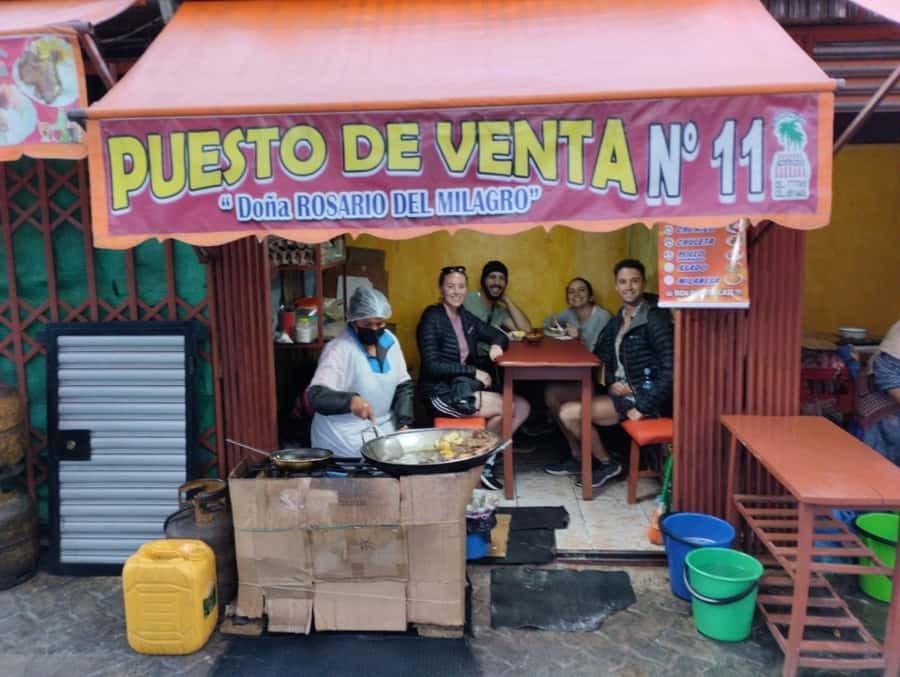
At $19 per person, the tour is inexpensive for a four-hour guided walk with several tastings. The price includes the guide and the food samples, so you are paying for both the meal stops and the explanations that connect them.
The value is strongest if you want an introduction to central La Paz. You visit several named markets and landmarks in one afternoon without arranging each stop yourself. You also avoid spending money on a large meal before discovering which local foods you like.
The value is weaker if you expect a substantial lunch or a carefully fixed menu. The tastings are not described in enough detail to know the portion sizes or exact dishes. You should still budget for any extra food, drinks, or transport after the tour.
The low cost does not remove the reliability concern. A cheap tour that fails to operate is no bargain. Use the free cancellation option, which allows cancellation up to 24 hours in advance for a full refund, and reserve with payment deferred if that option is offered at booking.
Who should book this walk?
I would choose this tour if you want a first look at La Paz through food, markets, and central landmarks. It suits curious eaters, first-time visitors, and anyone who prefers a moving city lesson to a formal restaurant meal.
It is also a good fit if you appreciate flexible guides. The strongest accounts describe Erwin, Christian, and Chris adjusting to personal needs, explaining customs, and helping guests feel comfortable.
I would skip it if you are vegetarian, since the operator says the tour is for carnivorous people and most Bolivians eat meat. I would also skip it if you need guaranteed medical support, a precise menu, or perfect booking reliability.
If you book, prepare for four hours on foot, dress in layers, bring water and sunscreen, and confirm the 2 p.m. meeting at Riosinho Square. Look for the green umbrella. Most important, keep the cancellation window open and verify that the guide is coming.
FAQ
Where does the La Paz street food tour meet?
The tour meets at Riosinho Square, close to Jaen Street in central La Paz. Look for the guide with the green umbrella.
What time does the English tour start?
The English tour starts at 2 p.m.
How long does the tour last?
The tour lasts approximately four hours.
What language is the tour conducted in?
The live tour guide speaks English.
Which markets are included?
The route includes Lanza Market, Rodriguez Market, and the Witches Market.
Which major landmarks are visited?
The route includes Jaen Street near the meeting point, Murillo Square, the San Pedro prison area, and San Francisco Church.
Are food tastings included?
Yes. The guide and the different tastings are included in the price.
Is the tour suitable for vegetarians?
The operator says the tour is available only for carnivorous people because many of the tastings are meat-based.
What should I bring?
Bring comfortable walking shoes, water, sunscreen, sunglasses, a camera, snacks, and clothing for changing weather. A jacket, pullover, or umbrella may be useful.
Can I cancel for a refund?
Yes. You can cancel up to 24 hours in advance for a full refund. Reserve now and pay later is also offered to keep plans flexible.
Newly added plates around the world
- Zanzibar:Stone town Street food market walking tour,transfer★ 4.5 · 9 reviews
- Zanzibar: Stone town visit, Shopping tour &Night food Market★ 4.4 · 2 reviews
- Xi’an Muslim Quarter Night Market Foodie Walking Tour★ 4.2 · 22 reviews
- Xi’an: Gourmet & Street Food Tour★ 4.8 · 22 reviews
- Zanzibar: Stone town tour, Prison island & night food market★ 4.5 · 2 reviews
- Verona: Street Food and History Tour with Local Guide★ 4.7 · 6 reviews
- Vienna Food Tour: Dishes, Wine, Street Food & Culture★ 4.7 · 12 reviews
- Verona: City Highlights & Street Food Walking Tour★ 5.0 · 3 reviews
Tours, compared.

Old Town, Creek, Museums, Souks, & Street Food Tour
Read our review →
Ho Chi Minh City Street Food Tour & Sightseeing By Motorbike
Read our review →
Comuna 13 Graffiti Tour, Cable Car & Street Food
Read our review →
Old Town, Souks, Street Food, Guided Tour & Abra Ride
Read our review →
Small Group Hanoi Street Food Tour with a Real Foodie
Read our review →
Private Street Food Tour by Motorbike/Car with Local Students
Read our review →