REVIEW · TOURS
Antigua Guatemala: Street Food Walking Tour with Tastings
Antigua’s best food is often found in small family-run spots, market stalls, and unassuming counters rather than polished dining rooms. This three-hour walk lets you try corn-based Mayan dishes, seasonal fruit, sweets, coffee, and atol while your guide explains how food connects to Guatemala’s culture and daily life. I especially like the market visit and the way guides such as JJ, Roberto, Felix, and Esteban add personal stories about Antigua.
I also like that the tour doubles as a gentle introduction to the city, with colonial buildings, 17th-century streets, and volcano views along the route. The main drawback is that you may cover a lot of ground on Antigua’s rough cobblestones, and the tasting selection can lean sweet on some departures. Bring comfortable shoes, pace yourself, and do not eat a large meal beforehand.
Key points to know before you book
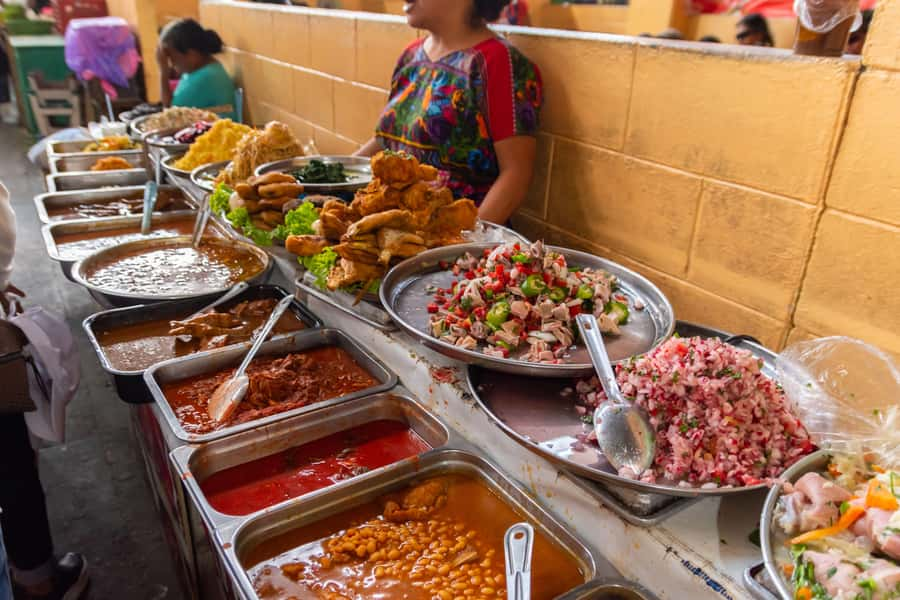
- Six to seven food samples: Expect a broad tasting rather than one full lunch, with savory dishes, fruit, sweets, coffee, and other local flavors.
- The market is a highlight: Your guide helps you understand unfamiliar fruit and produce, and points you toward trusted vendors.
- A food and city tour in one: You’ll learn about Antigua’s architecture, Mayan customs, exports, and colonial past as you walk.
- Guides make the difference: JJ, Roberto, Felix, Esteban, and other local guides are praised for warmth, local connections, and clear explanations.
- Come hungry, but pace yourself: Food is plentiful, and some departures include many sweet samples.
- Best early in your stay: The restaurant and bar suggestions can help shape the rest of your time in Antigua.
Why this Antigua food walk works so well
A food tour is a smart way to get your bearings in Antigua. The city is easy to explore on foot, but its low-key food culture can be harder to read at first. A doorway may lead to a small eatery, and a market stall may offer a fruit or snack you would never recognize on your own.
This tour brings those pieces together. You walk through the colonial center, stop for food, and hear how local ingredients connect to Mayan traditions and modern Guatemalan life. It is not just a sequence of tastings. You are also learning what people eat, where they shop, and how Antigua’s food culture has developed.
The experience lasts about three hours and includes six to seven food samples, two local drinks, bottled water, and a local guide. Lunch is not included, though the amount of food can be substantial. One person finished with leftovers, and another advised arriving with a strong appetite. I would treat it as a large snack-heavy meal, not a replacement for dinner.
More street food tours in the world:
- Dubai: Old Town, Creek, Museums, Souks, & Street Food Tour
★ 4.8 · 10,816 reviews - Ho Chi Minh City Street Food Tour & Sightseeing By Motorbike
★ 5.0 · 9,413 reviews - Medellin: Comuna 13 Graffiti Tour, Cable Car & Street Food
★ 4.8 · 9,046 reviews
Starting at Casa Mandarina and Columbus Guatemala Travel
The meeting point is the Columbus Guatemala Travel office at 2a Calle Poniente 2. The tour description also refers to Casa Mandarina, a traditional colonial house, as the starting point for the food journey. Confirm the exact meeting instructions when you book, since the office is the stated place to meet your guide.
Antigua’s street layout can confuse first-time visitors. The roads and addresses do not always work the way they do in the United States, and one person had trouble finding the office before the guide called and met them at the cathedral. Give yourself extra time, and keep the office address handy.
The walk starts in the center of Antigua, so you are quickly among colonial facades, old churches, cobblestones, and open views toward nearby volcanoes. A good guide uses the spaces between stops well, explaining the city instead of simply rushing you from one snack to the next.
You may see guides greet friends and shop owners along the way. That local familiarity matters. It helps you feel less like you are being moved through a list of commercial stops and more like you are being shown around someone’s home city.
The market: where the food lesson really begins
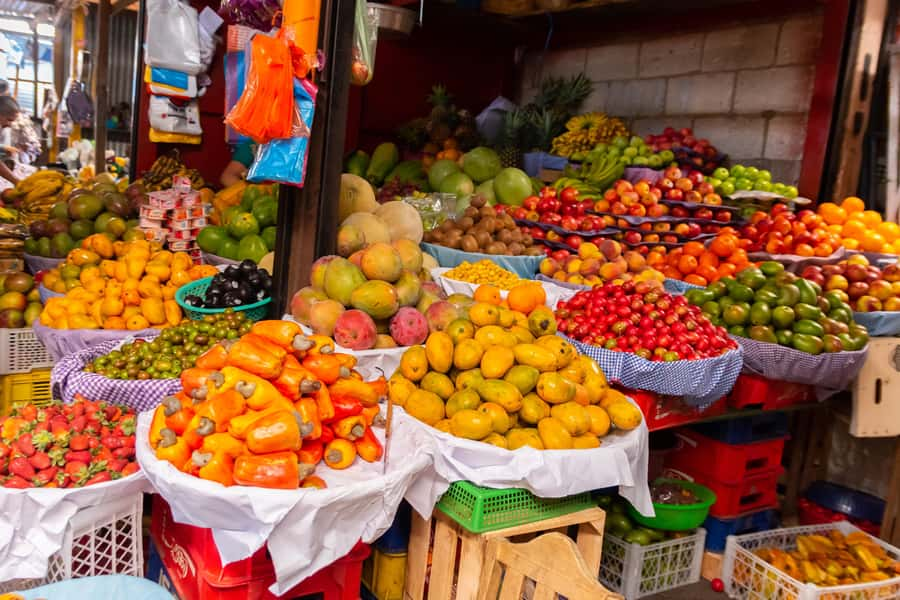
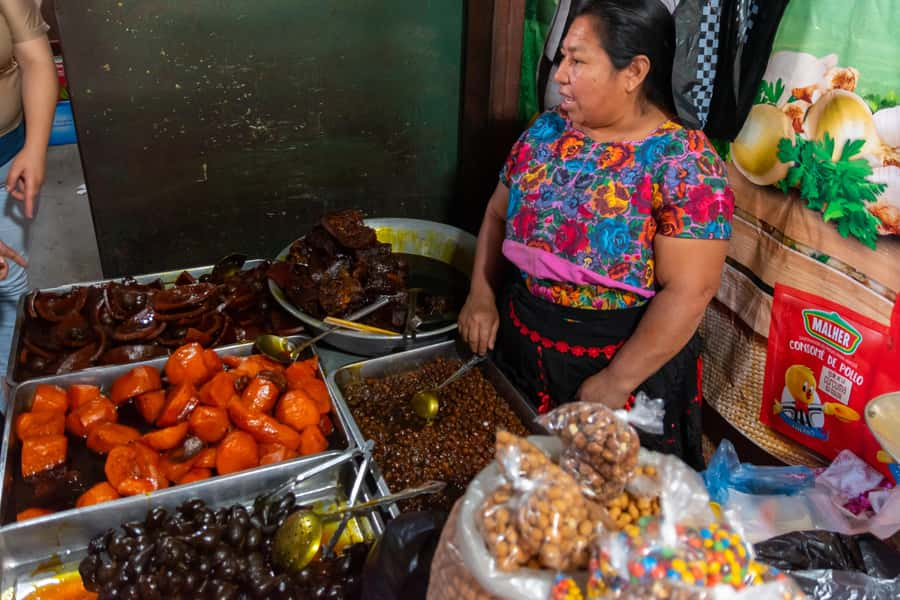
The market visit is one of the strongest parts of the tour, especially when the large local market is operating. The market can be hard to understand on your own. There are unfamiliar fruits and vegetables, many kinds of prepared food, and vendors who know exactly how to use ingredients that may be new to you.
Your guide helps you identify seasonal fruit and explains how it is eaten or prepared. One guide even used a method to disinfect fruit before serving it, a practical touch for visitors who may be cautious about fresh produce. That made it possible to try several types of fruit with more confidence.
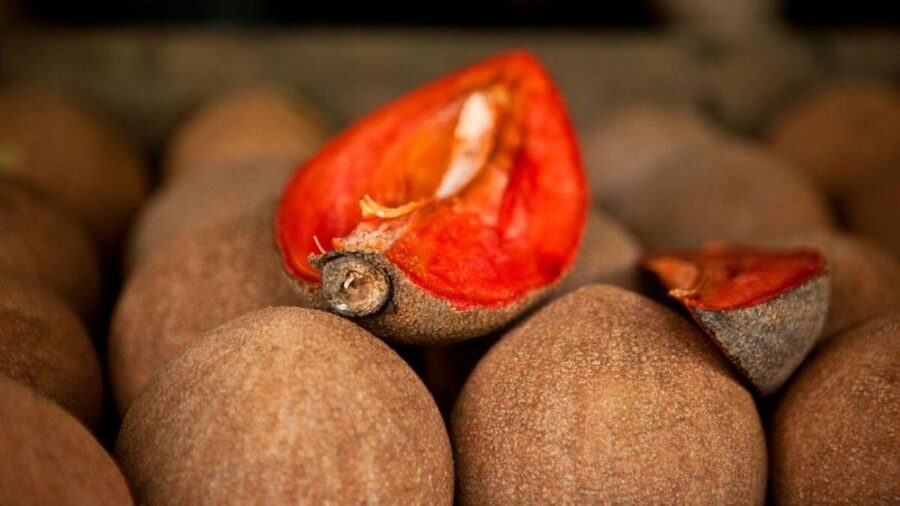
You might taste exotic seasonal fruit, including cacao fruit or different kinds of mangoes and plums. The exact selection changes with availability, so do not arrive expecting a fixed menu. That flexibility is useful because it lets the guide work with the market and the season instead of forcing the same items every day.
Market timing also matters. A Saturday outing may include a larger market experience, while another day may offer a smaller selection. The tour can adjust its order and stops according to availability, dietary restrictions, and the preferences of the group.
Corn, Mayan food, and the meaning behind the samples
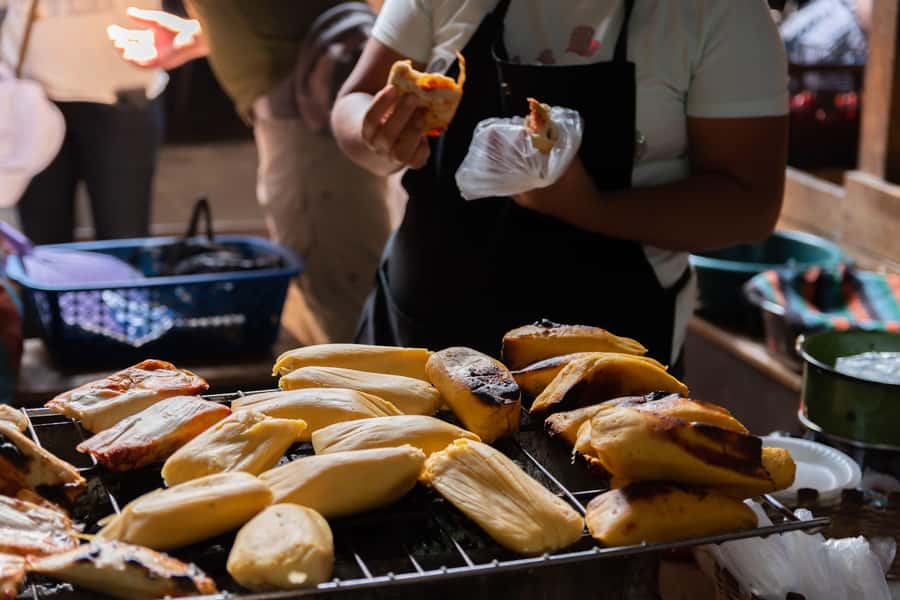
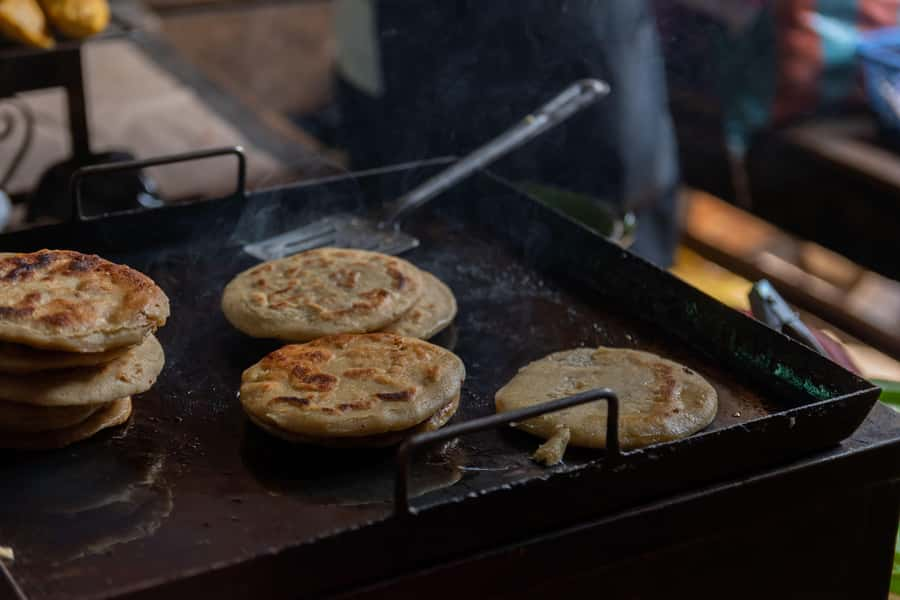
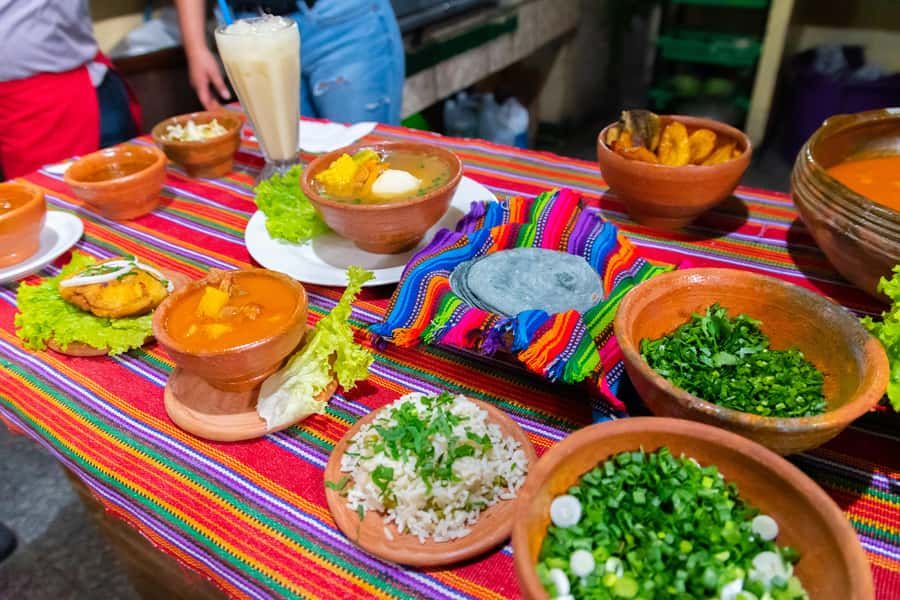
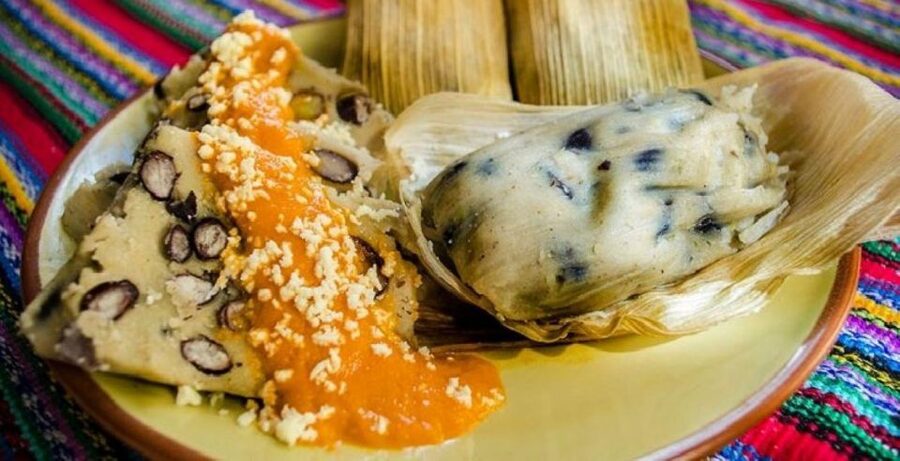
Corn is at the heart of the experience. The tour presents it as a central part of Mayan food traditions, and you will try authentic corn-based dishes along with other local foods. The point is not only to taste corn in different forms. It is to understand why it remains such an important part of Guatemalan cooking and identity.
The exact savory dishes are not fixed in advance. That is worth keeping in mind if you want a detailed menu before booking. You will receive a range of salty and sweet samples at several places, with the guide explaining what you are eating and how it fits into local culture.
I like this approach because food history can otherwise become abstract. A short explanation about ingredients makes more sense when you are holding and tasting the food. You begin to notice the difference between a snack made for everyday eating and a dish tied to older traditions.
Some stops are small, traditional places that have served the community for generations. Others may show a more modern side of Antigua’s food scene. The balance between old and new keeps the walk from becoming a single-note tour of heritage dishes.
Same city, another round of plates:
- Dubai: Old Town, Souks, Street Food, Guided Tour & Abra Ride
★ 4.9 · 7,170 reviews - Naples: Street Food Walking Tour with Local Guide
★ 4.9 · 4,976 reviews - Small Group Hanoi Street Food Tour with a Real Foodie
★ 5.0 · 4,682 reviews - Rome: Street Food Tour with Local Guide
★ 4.8 · 4,077 reviews
Fruit, sweets, coffee, atol, and local drinks
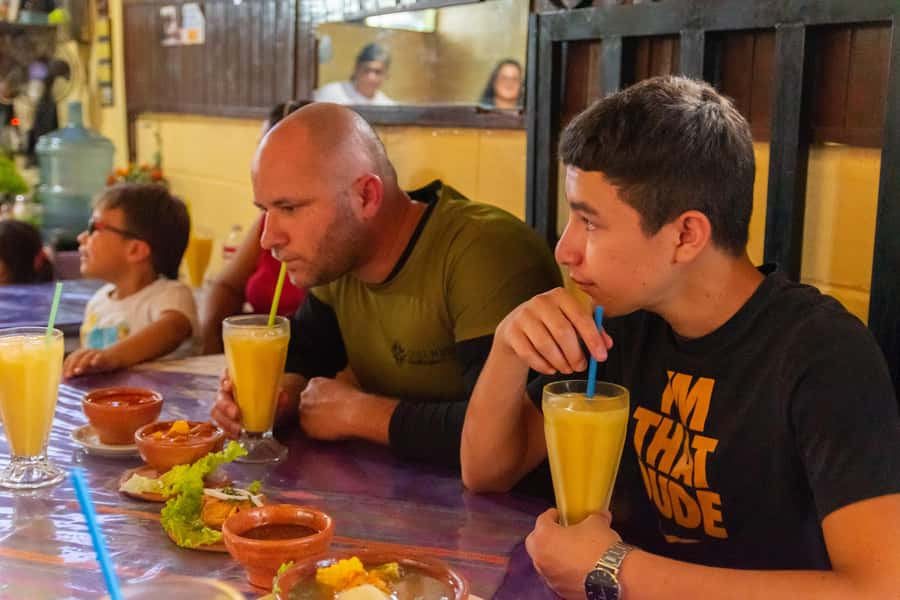
The sweet side of the tour can be generous. You may try Guatemalan candies, pastries, fruit, coffee, and atol, a warm local drink. Two local drinks are included, along with bottled water.
Coffee is a natural part of a Guatemalan food tour, and the tasting gives you a chance to enjoy it in context rather than treating it as a quick caffeine stop. Atol offers a different experience, with a comforting, traditional character. The precise drink choices can change, so ask your guide what you are trying and how it is normally served.
The sweets are enjoyable, but they can add up. One three-hour outing leaned heavily toward sweet tastes, so I recommend taking small bites and leaving room for the savory food. If you are sensitive to sugar or prefer savory dishes, tell your guide early. The itinerary can change for dietary restrictions and group preferences.
The tour is not designed as a formal tasting with measured portions. It is more generous and informal. You stop, try something, ask questions, and continue walking. That makes the experience relaxed, but it also means portion sizes and the balance of foods may vary.
Antigua’s buildings and volcano views between bites
The city setting gives this tour extra value. As you move between food stops, you pass colonial buildings and 17th-century structures, with the surrounding volcanoes visible from parts of the route. The guide also explains architecture, Mayan customs, local exports, and the history of Antigua and Guatemala.
This makes the outing useful for someone choosing between a food tour and a standard city walk. You get a practical introduction to both. Several guides are praised for explaining why the city looks as it does and how Mayan culture continues in present-day Guatemala.
Do not expect a full architectural tour with every major monument covered in detail. The food remains the spine of the experience. Still, the walking commentary adds context you would miss if you simply visited the same restaurants on your own.
The cobblestones are the practical issue. They can be demanding on your feet, especially over three hours. Wear supportive walking shoes, comfortable clothing, sunscreen, sunglasses, and a hat. The activity is listed as wheelchair accessible, but you should still confirm the route and current conditions if you use a wheelchair, since historic streets can be uneven.
The guides are the tour’s strongest feature
The guide can shape the entire experience. Names that come up often include JJ, Roberto, Felix, Esteban, Juan Jesus, Carlos, and Eduardo. The consistent strengths are warmth, local knowledge, clear explanations, and the ability to adjust the outing to the people in front of them.
JJ is described as a local who brings personal knowledge of Antigua and keeps the walk lively. Roberto is praised for connecting food with culture, architecture, and national history. Felix is especially strong at explaining the market, unusual produce, art, and Mayan customs.
Esteban has been praised for helping visitors feel at home and for taking time to explain the reasons behind Antigua’s buildings and traditions. Juan Jesus is noted for adapting the food choices to what the group was willing to try. These details matter because the tour is not a fixed audio guide. Your questions and appetite affect what you get from it.
Some outings have included a brief jade shop visit or a ride on a chicken bus. Those elements are not guaranteed parts of the stated itinerary, so treat them as possible additions rather than promises. The order of stops can change, too.
What the $68 price includes
At $68 per person, this is not the cheapest way to eat in Antigua. You could buy individual snacks for less. The value comes from access, explanation, and convenience.
You receive six to seven food samples, two local drinks, bottled water, and a guide for three hours. You also get help navigating the market and small local food places, plus restaurant and bar recommendations for later in your trip. The guide’s advice can be especially useful on your first or second day, when you are still deciding where to eat.
The price makes more sense if you want more than a list of dishes. You are paying for someone to explain the food, choose reputable stops, help with unfamiliar produce, and connect the meal to Antigua’s culture. It is less compelling if you mainly want a cheap lunch or already feel comfortable finding local food on your own.
Since lunch is not included, plan a later meal if you finish hungry. For many people, the tastings will be enough to delay lunch, but the timing and portions vary.
Who should book this tour
I would recommend it to first-time visitors who want an early orientation to Antigua. The restaurant advice is useful, and the walking route gives you a sense of the center before you explore on your own.
It also suits curious eaters who want to try fruit, sweets, corn dishes, and market foods that are easy to overlook. You do not need to be an expert in food. In fact, the tour is most useful when you are willing to ask questions and try something unfamiliar.
Families and mixed-age groups may appreciate the flexible pace, though everyone should be ready to walk on cobblestones. People with strict dietary restrictions should contact the operator in advance and repeat those needs to the guide at the start. The route and stops can be adjusted, but the information does not promise every dietary requirement can be met.
This is not the best match for someone seeking a formal restaurant meal, a fixed tasting menu, or a short route with very little walking. Rain can also make the experience less comfortable, since the tour depends on moving between outdoor stops.
Practical details before you go
The tour is available in English and Spanish. It has a 4.8 rating from 87 reviews, with especially strong praise for the guides, local food stops, cultural explanations, and friendly atmosphere.
Free cancellation is available up to 24 hours before the start, and you can reserve now and pay later. Starting times vary, so check availability for your date. The tour ends back at Columbus Guatemala Travel, with the listed drop-off location at 2a Calle Poniente 2.
Bring comfortable shoes, sunscreen, sunglasses, a sun hat, comfortable clothes, and any personal medication. Smoking, alcohol, and drugs are not allowed during the activity.
Should you book it?
Book this tour if you want Antigua’s food and city story together, especially near the beginning of your stay. The market guidance, local snacks, personal stories, and restaurant suggestions give you more than you would get by wandering from one café to the next.
Skip it if you want a cheap meal, dislike sweet foods, or prefer to avoid several hours on uneven streets. For most visitors who are open to trying new dishes and want a friendly introduction to Antigua, the $68 cost is reasonable for the amount of food, guidance, and local context packed into three hours.
FAQ
Where does the tour meet?
Meet your guide at the Columbus Guatemala Travel office at 2a Calle Poniente 2.
How long does the tour last?
The walking food tour lasts three hours.
What languages are available?
The tour is offered in English and Spanish.
How many food samples are included?
You receive six to seven food samples during the experience.
Are drinks included?
Yes. Two local drinks and bottled water are included. Coffee or atol may be part of the tasting selection.
Is lunch included?
No. Lunch is not included, although the tastings can be substantial.
Will the tour visit a local market?
Yes. The experience includes a food market visit, with the exact stops and order subject to change.
Can the tour accommodate dietary restrictions?
The stops and order may change according to dietary restrictions and group preferences. Contact the operator in advance if you have specific needs.
Is the tour wheelchair accessible?
The activity is listed as wheelchair accessible. Because Antigua has historic cobblestone streets, confirm the route and conditions when booking.
Can I cancel for a full refund?
Yes. You can cancel up to 24 hours in advance for a full refund. You can also reserve now and pay later.
Newly added plates around the world
- Zanzibar:Stone town Street food market walking tour,transfer★ 4.5 · 9 reviews
- Zanzibar: Stone town visit, Shopping tour &Night food Market★ 4.4 · 2 reviews
- Xi’an Muslim Quarter Night Market Foodie Walking Tour★ 4.2 · 22 reviews
- Xi’an: Gourmet & Street Food Tour★ 4.8 · 22 reviews
- Zanzibar: Stone town tour, Prison island & night food market★ 4.5 · 2 reviews
- Verona: Street Food and History Tour with Local Guide★ 4.7 · 6 reviews
- Vienna Food Tour: Dishes, Wine, Street Food & Culture★ 4.7 · 12 reviews
- Verona: City Highlights & Street Food Walking Tour★ 5.0 · 3 reviews
Tours, compared.

Old Town, Creek, Museums, Souks, & Street Food Tour
Read our review →
Ho Chi Minh City Street Food Tour & Sightseeing By Motorbike
Read our review →
Comuna 13 Graffiti Tour, Cable Car & Street Food
Read our review →
Old Town, Souks, Street Food, Guided Tour & Abra Ride
Read our review →
Small Group Hanoi Street Food Tour with a Real Foodie
Read our review →
Private Street Food Tour by Motorbike/Car with Local Students
Read our review →