
REVIEW · CATANIA STREET FOOD TOURS
Catania: Underground and Street Food Walking Tour
Catania is a city built in layers, and this tour lets you walk through several of them in one compact outing. You move from the black lava-stone Roman amphitheater to prehistoric caves, wartime church ruins, an ancient funeral chapel, and the underground river Amenano. Above ground, the route cuts through a noisy food market and ends with a classic Catanian drink.
I like the mix of archaeology and street food, since you get both the city’s serious past and its everyday flavor. I also like the small group size, with no more than 10 people, and guides such as Oreste and Matilde who bring strong archaeological and local knowledge. The main consideration is access: expect a few irregular steps, narrow underground spaces, and sites that can change if conditions or opening arrangements prevent access.
Key points to know before booking
- Roman ruins lead into lava caves: The tour begins at the Roman Amphitheater of Catania and quickly moves below the modern streets.
- The Amenano River runs beneath the city: You follow this underground watercourse toward an ancient thermal site.
- Market food is part of the tour: The stop at Piazza Carlo Alberto includes local snacks and time to absorb the open-air market.
- The final drink is distinctly Catanian: You finish with a mandarino e limone at a kiosk near the historic center.
- Oreste and Matilde are named guides: Oreste’s archaeology background has been especially useful for explaining Catania’s buried remains, while Matilde has led the route with the same clear, friendly approach.
- It is not suitable for everyone: People with claustrophobia, mobility impairments, motion sickness, or wheelchair users should choose another experience.
Why Catania makes sense from below
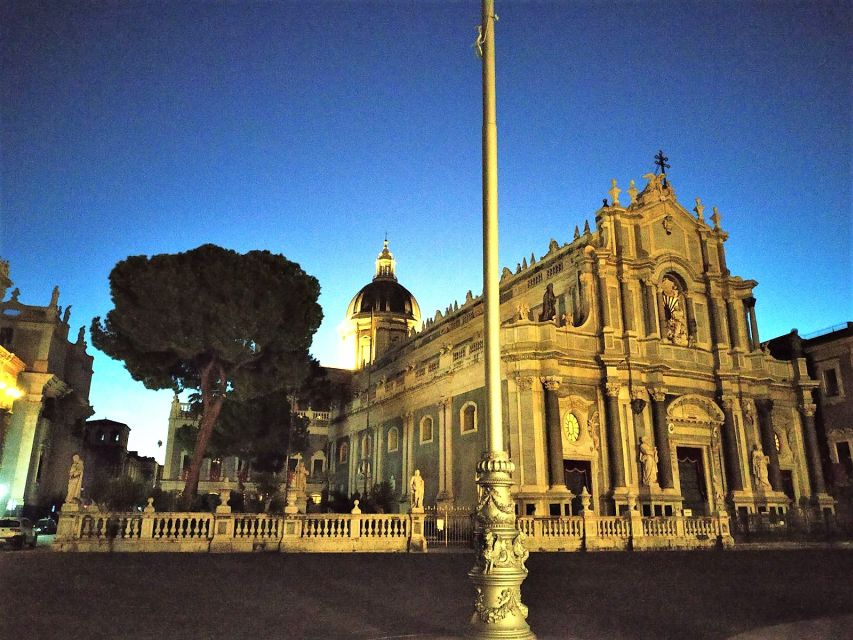
Catania can seem wonderfully chaotic at street level. Its main road, Via Etnea, points toward Mount Etna, while grand palaces, churches, markets, and dark volcanic stone fill the center. Yet much of the older city is out of sight.
Repeated eruptions and earthquakes changed the city over the centuries. New buildings went up over older Roman and religious sites, leaving a city where a church basement may reveal an earlier street, or a small opening may lead into a lava-formed cave. I like this tour because it explains that process through actual places rather than a long lecture in a museum.
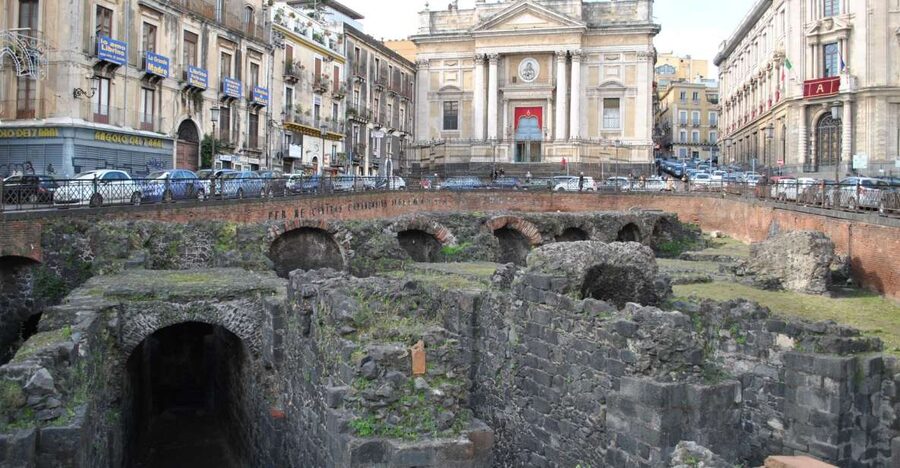
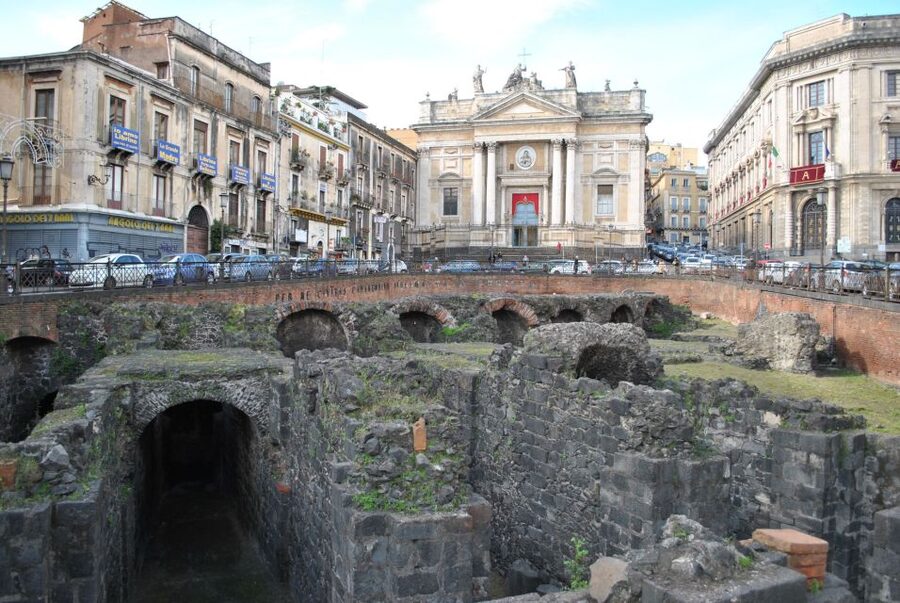
You begin at Piazza Stesicoro, beside the two-column entrance to the Roman Amphitheater. Look for the guide holding a nameplate. The starting point is central and easy to identify, but give yourself enough time to find the correct entrance. The amphitheater itself gets about 15 minutes, mainly as an introduction and photo stop.
From here, the guide sets up the basic idea of Catania: the city you see today is only the uppermost layer. The Roman remains are a useful first stop because they are right in the middle of modern Catania, surrounded by traffic, shops, and daily life. You do not need to imagine an isolated archaeological park. Ancient stone sits directly beneath the active city.
More street food tours in Catania:
- The Original Catania Street Food and Market Tour by Streaty
★ 5.0 · 345 reviews - Catania: Street Food Guided Walking Tour
★ 4.9 · 326 reviews - Catania: Guided Street Food Walking Tour
★ 4.7 · 300 reviews
Inside the caves shaped by Mount Etna
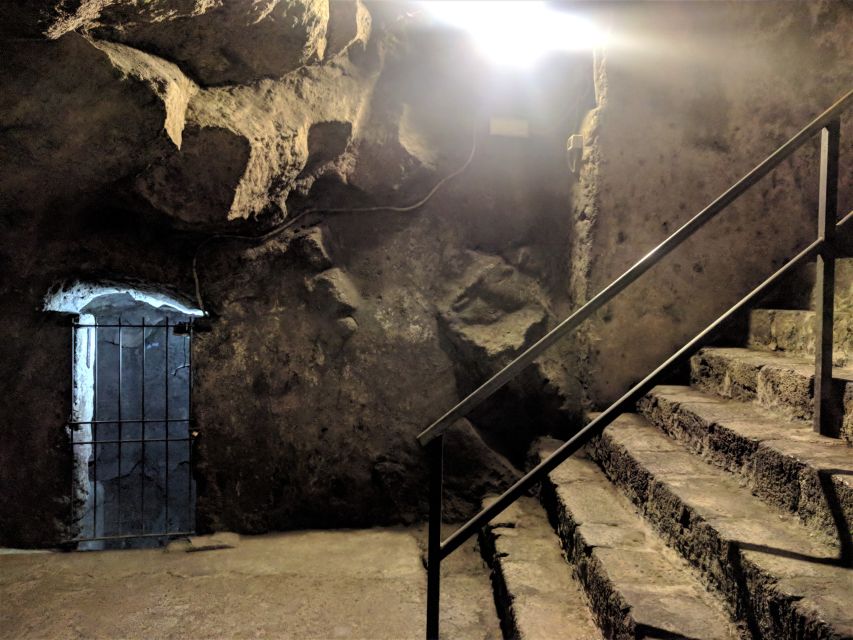
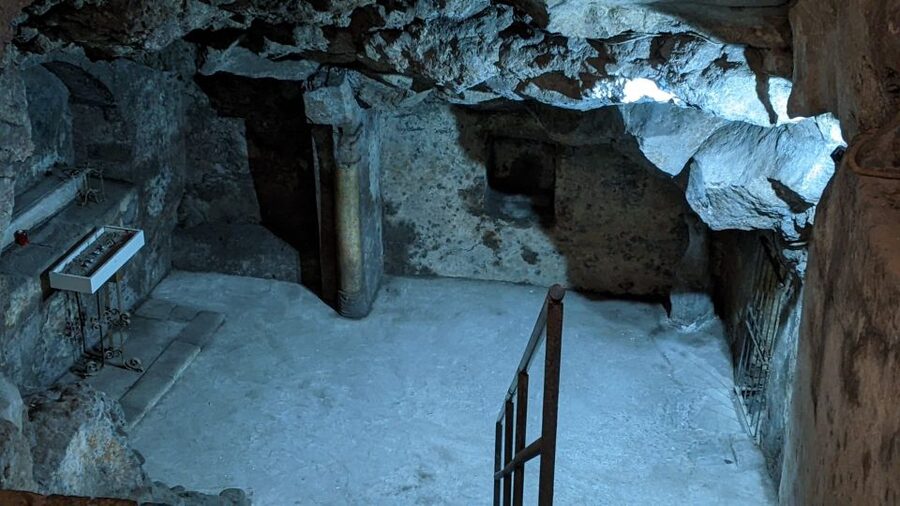
The first underground section lasts about 30 minutes. Here you may enter a prehistoric cave formed by volcanic activity, where the power of Etna becomes more than a distant view. The cave helps explain how eruptions shaped the ground beneath Catania and how later generations reused spaces that began as natural formations.
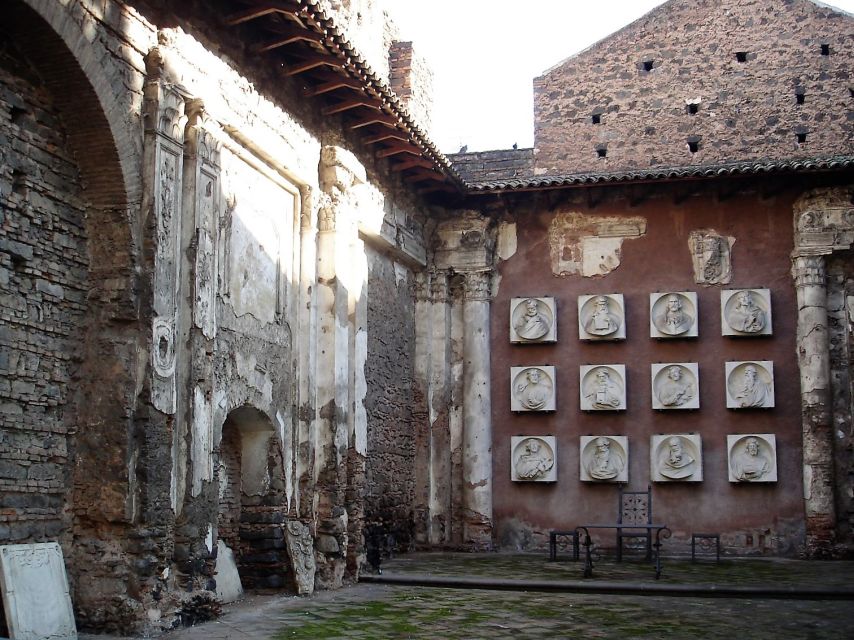
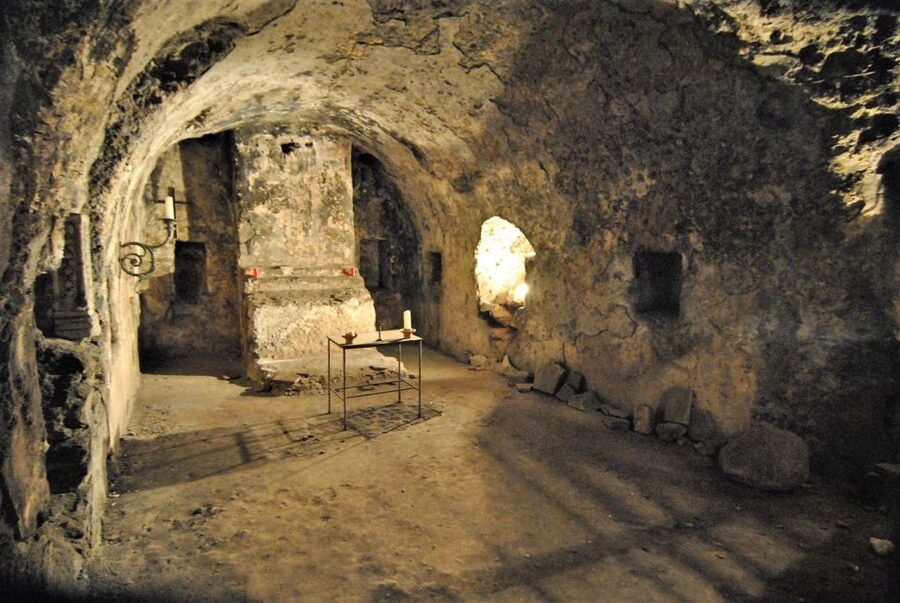
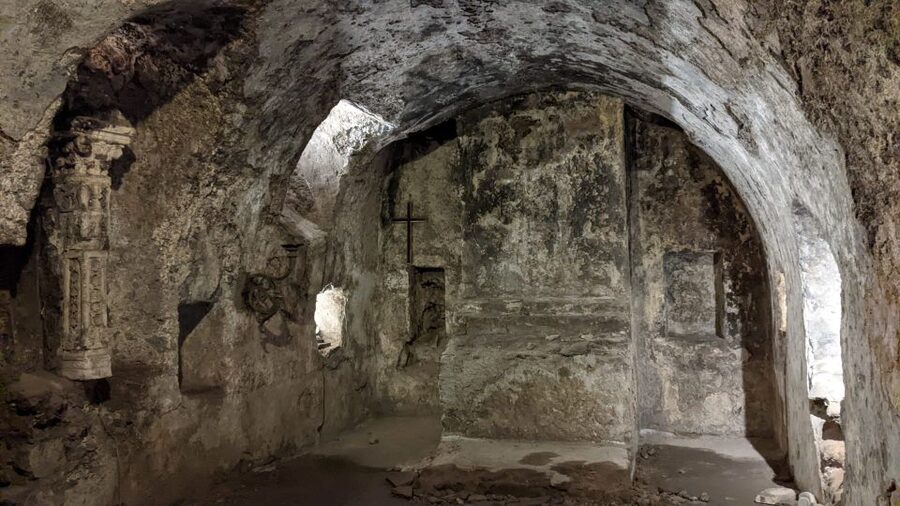
The route also includes religious places concealed beneath bombed churches and other parts of the old city. These spaces are not polished attractions with wide, even floors. You may climb a few steps, and some can be irregular. That gives the visit a genuine archaeological feel, but it also means you should watch your footing.
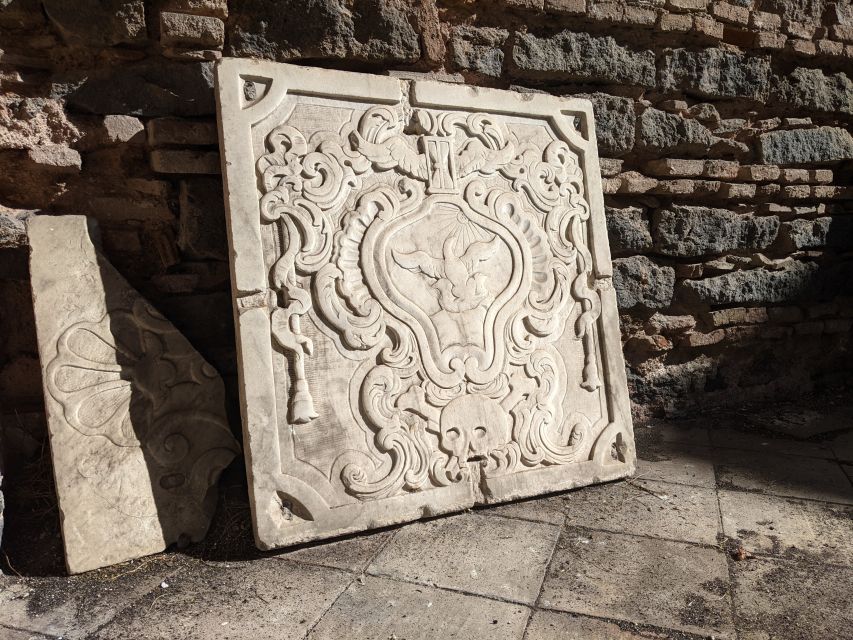
One of the most interesting stops is an ancient Roman funeral chapel. It adds a human scale to the Roman period. An amphitheater shows the size and public life of the ancient city, while a funeral space points to private customs and the way people marked death.
Access can vary. The experience takes place rain or shine, but prohibitive weather or a site being unavailable can lead to a replacement underground location. A Christmas Day visit, for example, required the guide to adjust the route because fewer sites were open. That flexibility is useful, especially on a tour built around places that may have restricted access.
A food break at Piazza Carlo Alberto
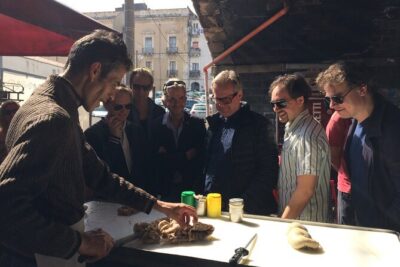
After the first underground visit, you reach Piazza Carlo Alberto and the open-air market. This is the point where the tour shifts from buried archaeology to ordinary Catania. The market is crowded, noisy, colorful, and full of the sounds and smells that make a food stop worthwhile.
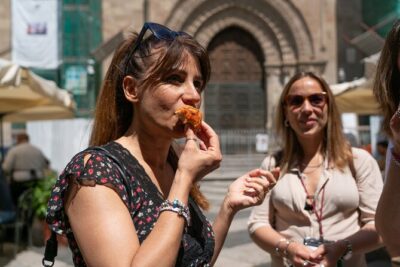
You receive local street-food tastes and snacks during a break of roughly 30 minutes. The exact food can vary, and the supplied description does not promise one fixed menu, so you should think of this as a guided introduction rather than a full meal. That is important if you arrive hungry. The tastings may be enough to get you started, but you may want to order more afterward.
I like the market stop because it gives the history a local setting. Instead of treating Catania as a collection of monuments, the guide shows you where residents shop and eat. Several people particularly enjoyed the food, with one dish remembered as among the best meals of a two-week trip. You may not learn every dish’s name during the quick stop, so ask the guide to repeat it if something catches your attention.
The market is also a practical place to ask what else to eat in Catania. Oreste has helped people choose local foods and offered suggestions for the rest of their time in town. That kind of advice can be as useful as the formal commentary, especially if you have only a short stay.
Via Etnea, black lava stone, and buried churches
After the food break, the route returns to the city’s major sights. You walk along Via Etnea, Catania’s main street, with aristocratic palaces and late Baroque churches lining the way. The street points toward Piazza del Duomo, and the architecture gives you a strong sense of the city’s rebuilt character.
The dark lava stone is one of Catania’s most memorable visual details. It appears in walls, paving, monuments, and the famous elephant in Piazza del Duomo. The elephant, topped by an obelisk, is an unusual city symbol and a good point for the guide to explain how Etna became part of Catania’s identity rather than just a mountain on the horizon.
This part of the walk is not simply a transfer between underground sites. It connects the buried places with the grand city above them. I find that useful because the contrast is the whole point: elaborate Baroque façades stand over older Roman and volcanic remains.
A later stop brings you to another lesser-seen site, described as a hidden location, for about 25 minutes. The exact place can depend on access, but the emphasis is on parts of Catania that are easy to miss without someone who knows where to look. The guide’s role matters here. Oreste’s archaeology training has helped make details of Roman occupation, volcanic eruptions, and wartime damage easier to follow.
Same city, another round of plates:
- Catania Sicilian Street Food Tour: Small Group by Do Eat Better
★ 5.0 · 293 reviews - Catania Street Food Tour: Fish Market & City Centre
★ 4.9 · 104 reviews - Catania: Street Food Walking Tour
★ 4.7 · 60 reviews - The Original Fish Market and Street Food Tour of Catania
★ 4.8 · 36 reviews
The Amenano River and the thermal baths
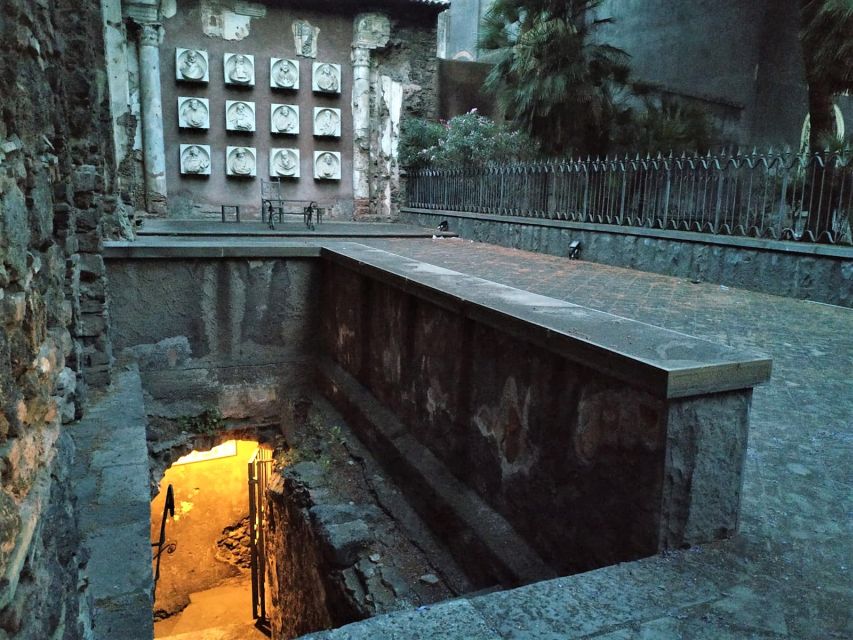
One of the tour’s most unusual features is the underground river Amenano. Rather than simply viewing an old wall or chamber, you follow the route of water beneath the city toward a thermal bath site.
The thermal baths receive about 30 minutes and are among the strongest archaeological stops on the route. Ancient bathing sites can be hard to picture when only a few fragments are visible, but being below the present street level makes the change in Catania easier to understand. The city was not built once. It was built, damaged, buried, and rebuilt over time.
The route through the underground sections is not suitable for everyone. You should be comfortable with confined spaces, a few steps, and uneven footing. The tour does not suit wheelchair users or people with mobility impairments, and it is also unsuitable for anyone prone to motion sickness. The stated weight limit is 280 pounds, or 127 kilograms.
If you are unsure about the physical side, this is one tour where it is wise to ask before booking. A small group and an expert guide can make the visit easier to manage, but neither changes the physical nature of the sites.
Ending with a mandarino e limone
The walk finishes near Piazza del Duomo, but first you stop at a kiosk on Via San Gaetano alla Grotta for a typical Catanian drink. The order is a mandarino e limone, a citrus drink made with mandarin and lemon, and it is presented as something to enjoy like a local.
This final stop lasts about 10 minutes. It is a modest ending, but it works well. After the darker underground spaces and the market noise, the drink gives you a relaxed pause before you continue exploring the center.
The route then includes roughly 15 minutes on foot before the final thermal-bath visit and finishes at Piazza del Duomo. Since the tour covers several different settings, wear shoes that can handle uneven surfaces and ordinary city walking. Light luggage is best. Oversize luggage and large bags are not allowed, and the underground sites are no place for bulky belongings.
What the guides add to the experience
The guide is the main reason this tour works. Catania’s buried remains can look like disconnected fragments without context. A guide has to explain what is Roman, what was shaped by lava, what belongs to later religious use, and how earthquakes, eruptions, and wartime bombing altered the city.
Oreste is specifically associated with an archaeology background, and his explanations have covered Roman occupation, the volcanic caves, the thermal baths, and the effect of eruptions. He has also helped people with practical suggestions about food, souvenirs, and other sights.
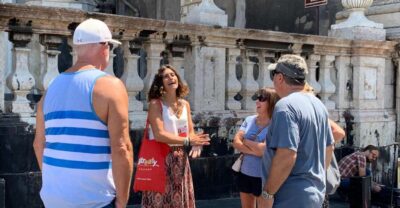
Matilde has led the experience with a clear and engaging manner. Both names are useful to know when you book, but guide assignments can change. The available languages are English, Italian, French, and Spanish.
The group limit of 10 is a real advantage. In a market, a smaller group is easier to keep together. Underground, it gives you a better chance to hear the explanation and ask questions. A solo booking is possible, though the social side may be quieter if no other participants join. One solo participant enjoyed the personal format but also noted that a group can make the experience more lively.
Timing, value, and who should book
The experience lasts about two and a half hours, which makes it a good choice if you have limited time in Catania. It combines an archaeological walk, market tastings, city architecture, an underground river, thermal baths, and a traditional drink without requiring a separate food tour and history tour.
That combination also explains the value. You are not paying only for entry to one monument. You are paying for access to several underground sites, interpretation in places that can be difficult to understand alone, food tastings, and a guide who can connect the pieces. The value is strongest if you want context and variety in one morning or afternoon.
It may feel pricey if your main aim is a long, relaxed meal or a single major archaeological site. The market food is a tasting break, not a full lunch, and the tour moves at a steady pace. If you prefer to linger over every church or order freely from market stalls, a self-guided visit may suit you better.
I would choose this for first-time visitors who want to understand why Catania looks the way it does. It is also a good fit for repeat visitors who have already seen Piazza del Duomo and Via Etnea but want access to the city below street level.
I would not choose it for anyone who dislikes enclosed spaces, has difficulty with steps, or wants a gentle, fully accessible walk. The experience is also less suitable if you need a substantial meal rather than small tastings.
Practical details that matter
The meeting point is at the entrance with two columns beside the Roman Amphitheater in Piazza Stesicoro. The listed coordinates are 37.50728988647461, 15.086018562316895. Look for the guide’s nameplate.
The tour runs in rain or shine. If weather becomes prohibitive or a site cannot be used, the organization may replace that stop with another underground location. This is worth accepting as part of the format, since access to old subterranean spaces can change.
You can cancel up to 24 hours before the start for a full refund, and the reserve-now, pay-later option keeps your plans flexible. Check the available start times when booking, since the tour lasts 2.5 hours and includes several timed stops.
The activity is offered in English, Italian, French, and Spanish. Alcohol and drugs, fireworks, electric wheelchairs, oversize luggage, and large bags are not allowed.
Should you book the Catania Underground and Street Food Walking Tour?
Book it if you want Catania explained through its most unusual feature: the old city beneath the new one. The combination of Roman remains, a lava cave, an ancient funeral chapel, the Amenano River, thermal baths, market snacks, and a mandarino e limone gives you a fuller picture than a standard surface walking tour.
The strongest reason to go is the guide-led access and explanation, especially with an archaeology-focused guide such as Oreste. The main reasons to hesitate are the steps, uneven ground, confined spaces, variable site access, and the fact that the food is a tasting rather than a complete meal.
For most able-bodied visitors interested in history, local food, and the forces that shaped Catania, this is a well-packed introduction to the city. Allow extra time afterward in Piazza del Duomo, because the tour gives you plenty of ideas for where to keep walking and eating.
FAQ
Where does the tour meet?
Meet at Piazza Stesicoro, at the entrance with two columns beside the Roman Amphitheater of Catania. The guide will be holding a nameplate.
How long does the experience last?
The tour lasts about 2.5 hours.
Which languages are available?
The tour is offered in English, Italian, French, and Spanish.
How large is the group?
The group is limited to 10 participants.
What food and drink are included?
You receive local street-food tastings at the open-air market and finish with a mandarino e limone at a kiosk.
Does the tour visit the Amenano River?
Yes. The route follows the underground Amenano River toward an ancient thermal-bath site.
Are there many steps?
You will climb a few steps, and some may be irregular.
Is the tour suitable for wheelchair users?
No. The experience is not suitable for wheelchair users or people with mobility impairments.
What happens if an underground site is unavailable?
If a site cannot be accessed or is not available, it may be replaced with another underground location chosen by the organization.
Newly added plates around Catania
- Street food tour of Catania by night★ 4.5 · 31 reviews
- Catania: Street Food Walking Tour★ 4.7 · 60 reviews
- Catania Street Food Tour★ 4.6 · 26 reviews
- Catania Street food tour by night★ 5.0 · 11 reviews
- The Original Fish Market and Street Food Tour of Catania★ 4.8 · 36 reviews
- Catania: Guided Street Food Tour with Tastings★ 5.0 · 3 reviews
- Catania Night Street Food & Backstreet Tour with a Local★ 4.6 · 14 reviews
- Catania Street Food Tour: Fish Market & City Centre★ 4.9 · 104 reviews
Catania Street Food Tours, compared.
The Original Catania Street Food and Market Tour by Streaty
Read our review →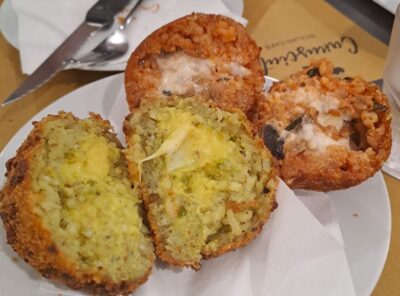

Catania Sicilian Street Food Tour: Small Group by Do Eat Better
Read our review →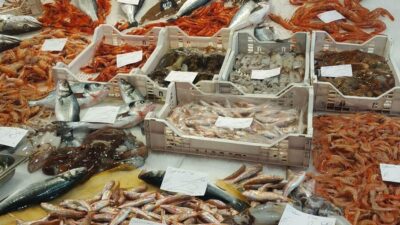
Catania Street Food Tour: Fish Market & City Centre
Read our review →
The Original Fish Market and Street Food Tour of Catania
Read our review →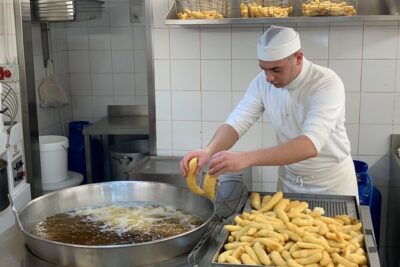
Browse the lists this tour appears in