
REVIEW · ROME STREET FOOD TOURS
Rome: Trastevere and Jewish Ghetto Street Food Walking Tour
Rome’s best food tours do more than feed you. They give you a reason to look closely at an old street, a church wall, or a bridge you might otherwise cross without a thought. This 2.5-hour walk through the Jewish Ghetto and Trastevere pairs five Roman tastings with local stories, legends, and neighborhood history.
I like the mix of classic Roman snacks and lesser-known corners, especially the fried artichoke, supplì, pizza al taglio, pastries, and gelato. I also like the small-group size, capped at 12 people, and the option to book privately. The main caution is appetite: portions can be modest, so this works best as a tasting tour before dinner, not a full meal replacement.
Key points to know before you book
- Five Roman tastings: Expect salty and sweet bites such as supplì, carciofi fritti, pizza al taglio, bakery treats, and gelato, though the exact selection may vary.
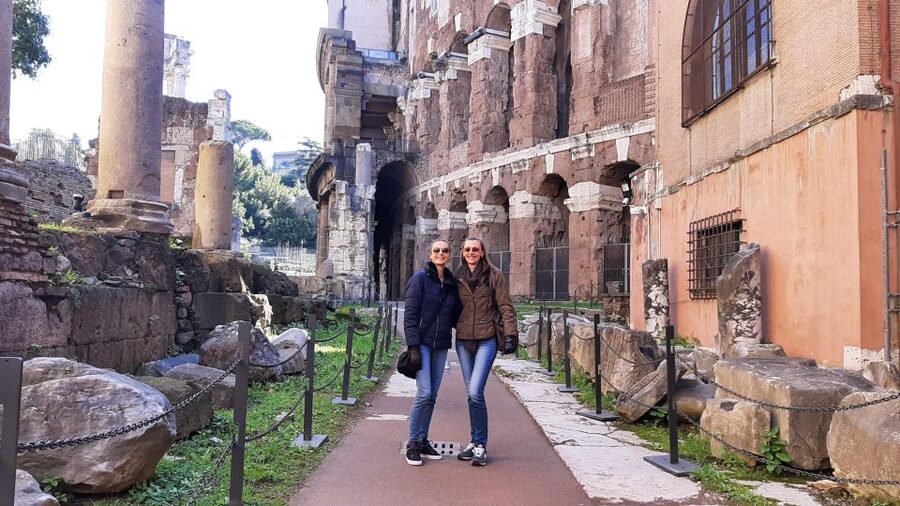
- Two historic neighborhoods: The route links the Jewish Ghetto with Trastevere, crossing Tiber Island and Ponte Sisto along the way.
- Guides make the difference: Chris, Daniel, Stefano, Christian, Virginia, Lele, and others are praised for combining food with stories and personal local detail.
- Small groups stay manageable: The shared tour has a maximum of 12 people, and private departures are available for your own group.
- Allow room for dinner: Several tastings are described as small portions, while other outings left people comfortably full.
- Bring sensible gear: Wear comfortable shoes, carry water, and bring a sun hat. The tour runs in rain or shine.
Why this Rome food walk works
The clever idea here is the route. You are not parked at one market or restaurant. Instead, you walk through two of Rome’s most characterful districts and taste food in the places where it belongs.
The Jewish Ghetto and Trastevere are close enough to connect on foot, but they do not feel identical. The Jewish Ghetto brings layers of Roman Jewish history, narrow lanes, and food shaped by local tradition. Trastevere has a more informal, neighborhood feel, with lively squares, old lanes, and plenty of places where Romans stop for a snack or evening meal.
The walk also gives you useful orientation. Afterward, you may want to return to one of the bakeries, pizzerias, or gelaterias. One practical improvement would be a map of the stops, since it can be difficult to remember exactly where each food was served. Bring your phone and save places as you go if something catches your attention.
Guides are a big part of the value. Chris receives repeated praise for his humor, warmth, and grasp of Roman history. Daniel is especially praised for bringing the city and Jewish history to life. Stefano, Christian, Virginia, Lele, Daniele, and Serena are also singled out for friendly, personal guiding.
Guide assignments can change, so you cannot count on a particular person. Still, the repeated pattern is clear: this is not meant to be a silent march between snack stops. The guide is expected to explain what you are eating, where you are walking, and why the neighborhood matters.
More street food tours in Rome:
- Rome: Street Food Tour with Local Guide
★ 4.8 · 4,077 reviews - Rome: Trastevere & Campo de Fiori Street Food Walking Tour
★ 4.9 · 2,768 reviews - Rome Street Food Tour with Local Guide
★ 5.0 · 2,361 reviews
Starting near Piazza Benedetto Cairoli
The listed meeting point is Piazza Benedetto Cairoli, at number 118, though the exact meeting place can vary with the option you book. Check your confirmation closely, and allow extra time to find the guide. One person had trouble locating the meeting spot but reached the guide by phone and connected a few minutes later.
The tour starts with a food tasting in Rome before moving into the Jewish Ghetto. Since the meeting details may differ between shared and private options, do not rely only on a general map pin. Read the final meeting instructions carefully.
This opening tasting sets the tone. You begin with a Roman bite, then learn how food and neighborhood life connect. The experience is better if you arrive ready to sample rather than expecting a seated meal.
Supplì, fried artichoke, and Roman snack culture
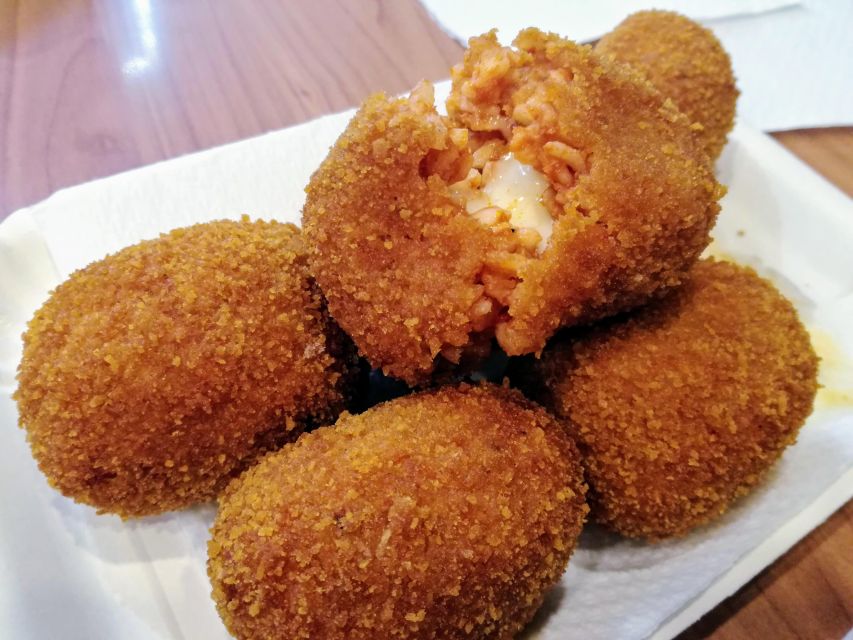
Supplì is one of the most useful foods to encounter early in the tour. This fried rice croquette is a Roman classic, usually with a crisp outside and a soft center. It is the sort of snack that makes sense on the street: hot, filling enough to hold you over, and easy to eat while standing.
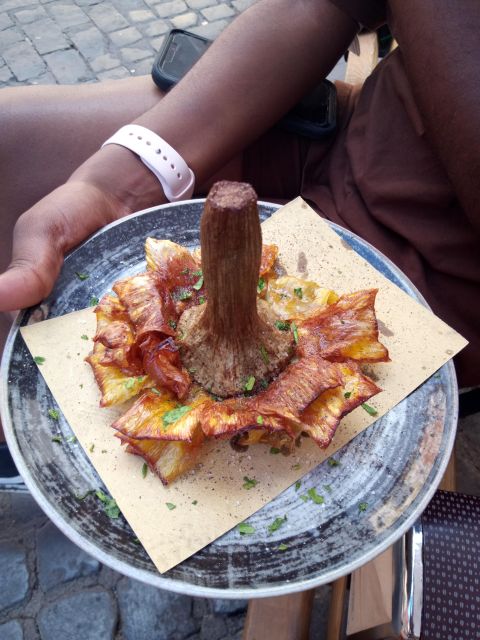
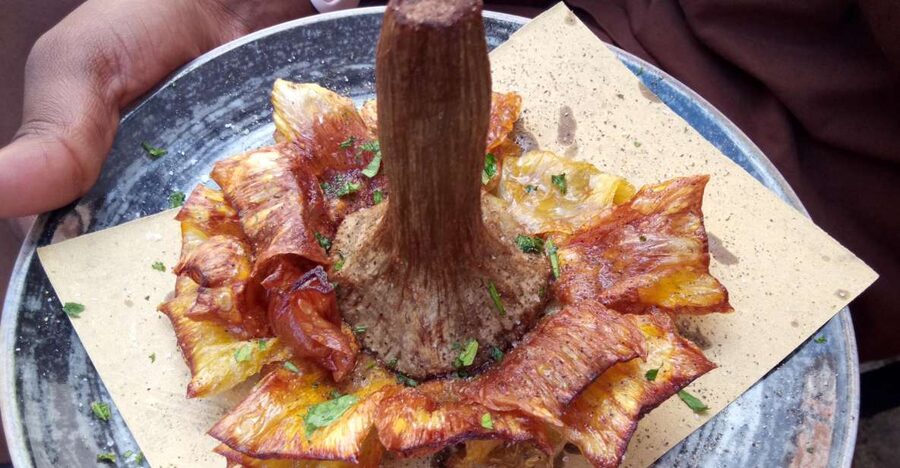
Fried artichoke is another important taste, especially in the Jewish Ghetto. The tour description specifically highlights a deep-fried artichoke, and several food combinations mention carciofi. This is a good chance to try something you might skip when ordering a familiar plate of pasta.
You may get these items at separate stops or as part of the opening food portion. Exact serving order can vary. The point is not to compare five full dishes. You are sampling the Roman habit of eating small, savory foods throughout the day.
One useful tip: ask the guide what each item is called and where you can find it again. The food names are easy to forget once you are also listening to stories and watching the streets.
The Jewish Ghetto: history between the bites
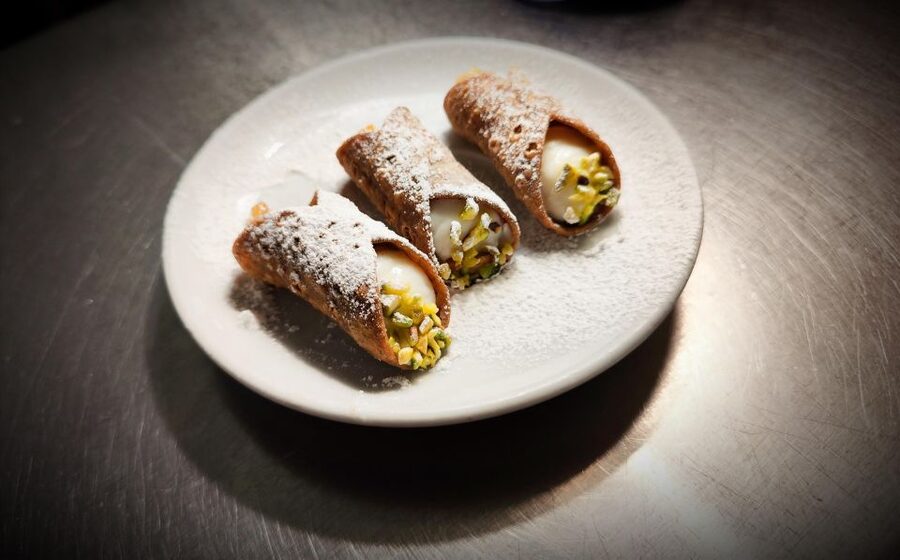
The guided portion of the Jewish Ghetto lasts about 30 minutes, making it one of the main storytelling sections of the route. You are not simply passing through on the way to the next snack.
This neighborhood carries a difficult and important past, and the guides explain how that past shaped the area and its cooking. One guide, Daniele, was able to add a personal local perspective, having grown up in Rome. Daniel was praised for giving especially strong explanations of Jewish history in Europe and Rome.
The tour is not a dedicated Jewish Ghetto study walk, so you should keep your expectations in check. If this district is your main interest, you may want a longer stand-alone visit. One person specifically wished for more time in the Ghetto. Still, the 30-minute guided section gives useful context and helps you notice more than the food shops.
A second tasting in the Jewish Ghetto lasts about 10 minutes. That short stop may include one of the savory specialties already mentioned, such as fried artichoke. Portions are tasting-sized, which lets you sample without spending the afternoon over a single heavy meal.
Same city, another round of plates:
- Rome: Trastevere Street Food Walking Tour with Local Expert
★ 4.8 · 1,784 reviews - Roman Food Tour with Visit to the Trionfale Food Market
★ 5.0 · 471 reviews - Trastevere & Campo de’ Fiori Street Food Tour, Eat Like a Local
★ 5.0 · 207 reviews - Hidden Rome: Small Group E-Bike Tour with Street Food Stops
★ 5.0 · 169 reviews
Tiber Island and Piazza in Piscinula

From the Ghetto, the route reaches Tiber Island for a guided stop of about 10 minutes. This is a welcome change of pace after the narrow streets. The island gives the walk a clear sense of movement, and crossing the river helps link the two neighborhoods.
The next stop is Piazza in Piscinula, also with about 10 minutes of guiding. Here, the value is less about checking off a famous monument and more about understanding how the old street plan and small public spaces fit together.
The route is designed for walking, not rushing. Several people appreciated the relaxed pace and time for photographs. That matters in this part of Rome, where the best moments are often small: a view down a lane, a passing street performer, or a square that feels more local than grand.
You should still wear sturdy, comfortable shoes. The tour covers several districts and ends at a different location from the start, on Via dei Pettinari. That makes comfortable footwear more important than dressing for a formal dinner.
Trastevere through pizza, pastries, and gelato
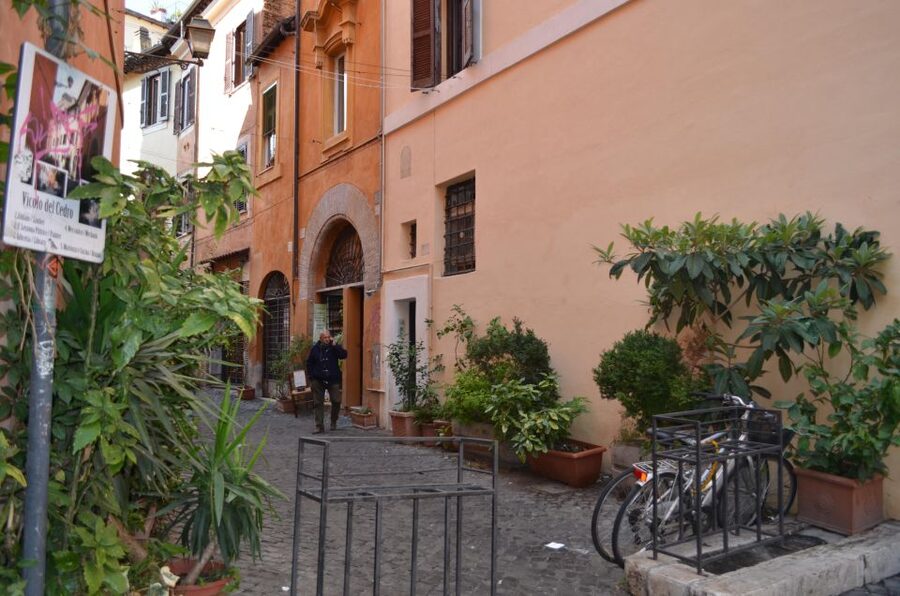
The Trastevere section includes about 30 minutes of food tasting. This is where the tour becomes especially useful for anyone trying to understand Rome beyond its famous sit-down dishes.
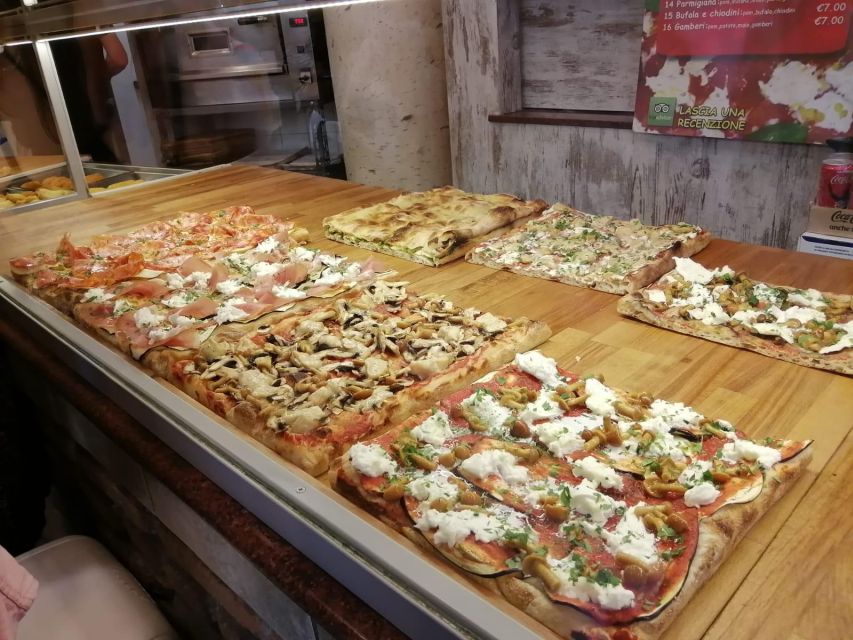
Pizza al taglio, or pizza sold by the slice, is one possible stop. The idea is simple: choose a piece from a tray, often with a crisp base and a topping that changes by the day. It is quick, informal, and very Roman.
Sweet items may include cookies or pastries from a bakery. One person called the bakery a real find, while others enjoyed the contrast between savory food earlier in the walk and sweets later. This is a good reminder that Roman street food is not limited to fried snacks.
Gelato often provides the finish. Several food combinations included gelato, and one guide took the group to Guenther Gelato, described as one of the world’s 25 best gelato shops. That particular stop may depend on the day and guide, so treat it as a possible highlight rather than a guaranteed feature.
A word about hunger: the amount of food is not perfectly consistent from one outing to another. Some people felt full by the end, while others wanted dinner soon after. I would plan to eat a proper meal later, especially if you have a large appetite. The tour is best viewed as five tastings, not five courses.
Piazza Trilussa, Ponte Sisto, and the walk toward the finish
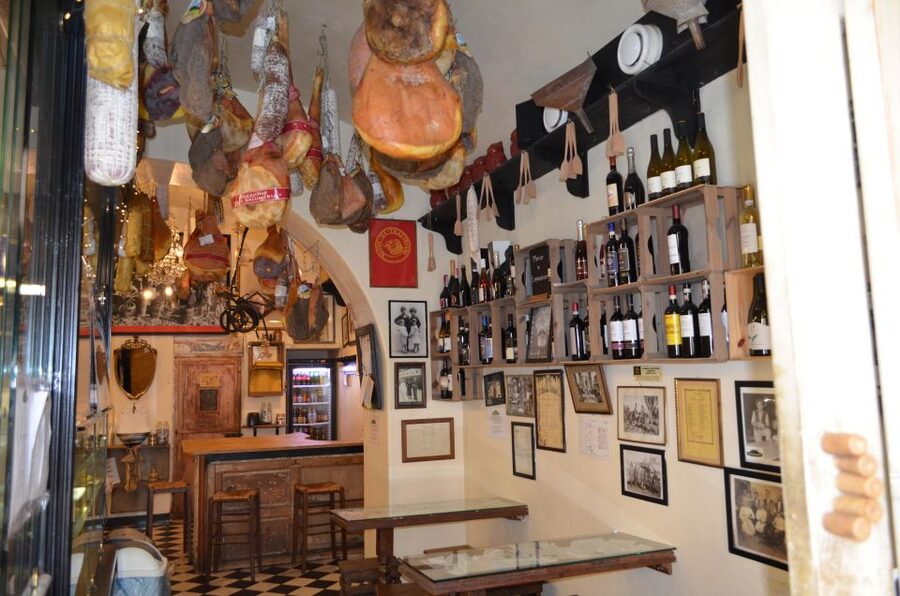
After the Trastevere tastings, the walk continues through Piazza Trilussa, with about 10 minutes of guided explanation. The square is a natural place to pause and take in the local evening atmosphere.
The route then reaches Ponte Sisto, another 10-minute guided stop. One person especially enjoyed crossing the bridge and seeing street performers. This is one of the tour’s pleasures: you get food, but you also move through public places where Rome’s daily life is on display.
The final guided section passes along Via dei Pettinari, followed by another food tasting of about 15 minutes. The tour ends there rather than returning to the starting point. That is convenient if you want to continue exploring central Rome, but less convenient if you need to retrieve something from your hotel or return to your original meeting area.
Because the tour crosses districts and finishes elsewhere, I would avoid scheduling a tight reservation immediately afterward. Give yourself time to walk, find transportation, or stay nearby for dinner.
What $65 buys you
At $65 per person, the tour is not a cheap way to eat dinner. You are paying for five tastings, a 2.5-hour walking route, and a guide who explains the food and neighborhoods.
The value improves if you want orientation and context. A self-guided walk may cost less, but you would need to research the food, locate the stops, and connect the Jewish Ghetto with Trastevere on your own. Here, the guide handles that work and adds local anecdotes.
The price is also easier to justify for first-time visitors who want a gentle introduction to Roman eating habits. You can discover foods you might not order alone, then return to the places you liked. It is less compelling if you want large portions, drinks included, or a formal meal.
Drinks are not included, though you can buy them. One person specifically wished that a drink came with the tastings. Carry water, and budget extra if you want something to drink along the way.
Group size, private tours, and guide style
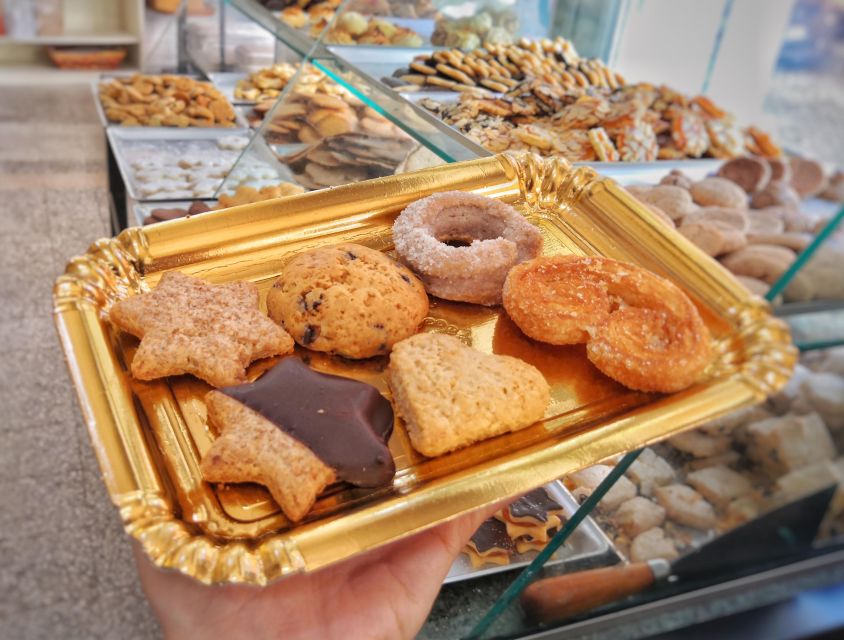
The shared tour has a maximum of 12 people. That is small enough for questions and conversation without the guide having to shout across a crowd. It also gives the walk a social feel, and one family group enjoyed the experience with ages ranging from 13 to 79.
A private option is available if you want a more personal pace or are traveling with your own group. The private format may suit families, couples, or anyone with specific food needs, but the same food restrictions should still be declared at booking.
The strongest guide comments describe an easygoing style. Chris is praised for humor and clear explanations. Daniel is described as passionate about Rome and especially good at connecting local stories with wider history. Stefano is praised for personal attention, while Virginia and Lele receive credit for keeping the group relaxed and unhurried.
The guide can also make the tour feel more like a neighborhood introduction than a fixed lecture. One person valued receiving tips for other places to eat and advice on finding good gelato. That kind of practical information can be worth as much as one extra snack.
Food restrictions and mobility notes
Vegan, gluten-free, or lactose-free requests can sometimes be accommodated, but they are not guaranteed at every tasting. Tell the operator when booking, not when you arrive. One person with celiac disease was pleased with the alternatives arranged by the guide, but you should not assume every stop can provide a suitable substitute.
The activity information says the tour is wheelchair accessible, yet it also lists people with mobility impairments among those for whom it is not suitable. That is a clear point to confirm before booking. Ask about the exact route, street surfaces, access to food stops, and any steps.
The tour is not suitable for vegans, people with food allergies, or those with hearing impairments according to the supplied conditions. It operates in rain or shine, so bring a sun hat and water in warm weather and a rain layer when needed.
Who should book this tour
I would choose this for a first or second visit to Rome, especially if you want to combine food with neighborhood context. It suits couples, families, and mixed-age groups who enjoy walking and sampling several things rather than sitting down for one long meal.
It also works well early in a Rome stay. The route can help you get your bearings in Trastevere and the Jewish Ghetto, and the guide’s restaurant or gelato suggestions may shape the rest of your trip.
I would hesitate if your main goal is a full dinner, a deep study of Jewish Roman history, or a strictly vegan food experience. I would also think twice if walking for 2.5 hours is difficult or if you need exact control over every ingredient.
FAQ
How long does the Rome street food tour last?
The tour lasts 2.5 hours.
How many food tastings are included?
Five street food tastings are included.
Which neighborhoods does the tour visit?
The route visits the Jewish Ghetto and Trastevere, with stops at Tiber Island, Piazza in Piscinula, Piazza Trilussa, Ponte Sisto, and Via dei Pettinari.
What foods might be included?
Possible foods include supplì, fried artichoke, pizza al taglio, cookies or pastries, and gelato. The exact selection may vary.
What languages are available?
Guides operate in English, French, and Italian.
Can I book a private tour?
Yes. You can choose a small-group tour with a maximum of 12 people or a private tour for your own group.
Are dietary restrictions accommodated?
Vegan, gluten-free, and lactose-free requests may be accommodated but are not guaranteed at every tasting. You must advise the operator when booking. The tour is listed as unsuitable for vegans and people with food allergies.
Should you book it?
Book this tour if you want a useful first taste of Rome’s street food and two historic neighborhoods in one outing. The best part is the combination of snacks, walking, and local storytelling, with guides such as Chris, Daniel, Stefano, Christian, Virginia, and Lele receiving especially warm praise.
Go in expecting tasting portions rather than dinner, and plan to buy drinks or eat afterward. If you confirm the meeting point, disclose dietary needs early, and wear comfortable shoes, the $65 price offers solid value for a relaxed introduction to this side of Rome.
Newly added plates around Rome
- Vegan Street Food Tour in Rome★ 5.0 · 6 reviews
- Testaccio Street Food Tour Eat Like a Local★ 3.5 · 2 reviews
- Tasty Trastevere Street Food Tour in Rome from Tiberine Island to Ponte Sisto★ 5.0 · 25 reviews
- Vatican Street Food Tour and Wine Experience with Local Guide★ 5.0 · 7 reviews
- Gems of Rome: Small group E-bike tour with street food stops★ 5.0 · 36 reviews
- Tasty Rome Street Food Tour around Campo de’ Fiori Market & Jewish Ghetto★ 5.0 · 2 reviews
- Small-Group Rome Street Food Guided Tour★ 5.0 · 15 reviews
- Gourmet Street Food and Guided Sightseeing Tour In Rome★ 5.0 · 3 reviews
Rome Street Food Tours, compared.
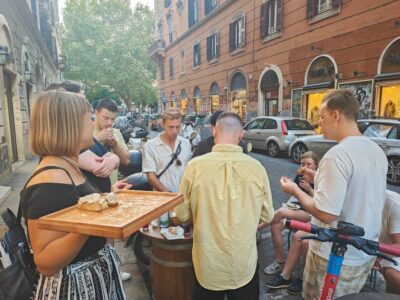
Trastevere & Campo de Fiori Street Food Walking Tour
Read our review →
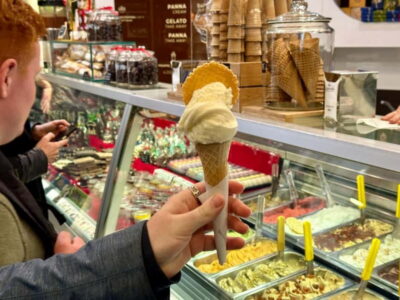
Trastevere Street Food Walking Tour with Local Expert
Read our review →
Roman Food Tour with Visit to the Trionfale Food Market
Read our review →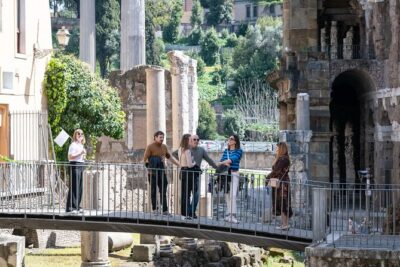
Trastevere & Campo de’ Fiori Street Food Tour, Eat Like a Local
Read our review →
Hidden Rome: Small Group E-Bike Tour with Street Food Stops
Read our review →Hidden Rome: Small Group E-Bike Tour with Street Food Stops
Read our review →
Browse the lists this tour appears in