
REVIEW · COFFEE EXPERIENCES
Hanoi Egg Coffee Class and Street Food Walking Tour
Hanoi’s food culture comes alive through two simple pleasures: a walk through the Old Quarter and a hands-on coffee class. You’ll taste five street foods, then make Vietnamese egg coffee at Cafe Minh, along with Hanoi-style and Saigon-style milk coffee.
I like the small maximum of eight people, which keeps the food stops and coffee lesson personal. I also like the practical format: you eat the dishes, learn the background, and leave with recipes and a small gift. The main catch is that the food walk and coffee class are described as separate parts, so check your chosen start time and meeting details carefully.
Key points to know

- Five street-food tastings: Sample spring rolls, pho rolls, pillow cake, shrimp cake, sweet donuts, or deep-fried fermented pork, with vegetables and fish sauce.
- Three-hour Old Quarter walk: The food route includes mixed pho, banh mi with pate, and chè, plus an introduction to Vietnamese food customs.
- Hands-on coffee making: Prepare egg coffee and both Hanoi-style and Saigon-style milk coffee at Cafe Minh.
- Helpful English instruction: Devin is repeatedly named as an engaging teacher, while David and Tu or Kelvin are also associated with the coffee or food portions.
- Small-group format: The maximum is eight people, useful in narrow Old Quarter lanes and around a shared coffee table.
- Convenient but limited pickup: Hotel pickup is offered inside Hanoi’s Old Quarter. If you stay elsewhere, you must make your own way to the office at 72 Tran Nhat Duat.
A food-first way to meet Hanoi
I like this experience because it does not treat Hanoi’s cuisine as a list of famous dishes to photograph and forget. You walk, stop, taste, and get a little context about how Vietnamese food is eaten. The route is built around familiar local staples, but it also includes less familiar snacks such as pillow cake and deep-fried fermented pork.
The coffee class gives the tour a second rhythm. After several tastings on foot, you sit down and work with ingredients yourself. That makes the coffee more memorable than simply ordering an egg coffee at a cafe. You see how much care goes into the creamy topping, and you get recipes that can be used at home.
At $36 per person, the value comes from the combination. You receive a guide, five food tastings, an English-language coffee instructor, ingredients, equipment, hotel pickup in the Old Quarter, and a small gift. It is not the cheapest way to buy a coffee and a meal, but it is a fair price for a roughly four-hour experience with food, instruction, and local orientation included.
The main point to watch is the wording around the schedule. The walking portion is listed at three hours and the coffee class at one hour, while the overall duration is given as three to four hours. The class also has a separate meeting point at 53 B P. Luong Ngoc Quyen. Confirm the time you select so you know how the two parts fit together.
More coffee stops around Hanoi:
- Hanoi: Vietnamese Street Food Tour with Egg Coffee
★ 4.9 · 315 reviews - Hanoi Jeep Night Street Foodie Tour, Train Street and Egg Coffee
★ 5.0 · 60 reviews - Discover Hanoi’s Street Food by Night & Mini Class Coffee
★ 4.8 · 28 reviews
Starting among the Old Quarter lanes
The walking portion begins at 47 P. Hang Bong in Hang Trong, within Hoan Kiem District. This puts you in the Old Quarter, where short distances can take time because of foot traffic, scooters, shopfronts, and narrow lanes. A small group matters here. Eight people is easier to keep together than a large busload, and you have a better chance to hear the guide at food stalls.
Your guide introduces Vietnamese food traditions as you walk. That background is useful because Vietnamese street food is often shaped by small details: a dipping sauce, the texture of a wrapper, the balance of herbs and raw vegetables, or the way a dish is served at different times of day.
Do not expect a formal restaurant meal at each stop. This is a tasting walk. You sample several items, move on, and build a picture of Hanoi’s everyday cooking one bite at a time. Wear comfortable shoes and come ready for a fairly active three hours.
Five tastings, from fried snacks to chè
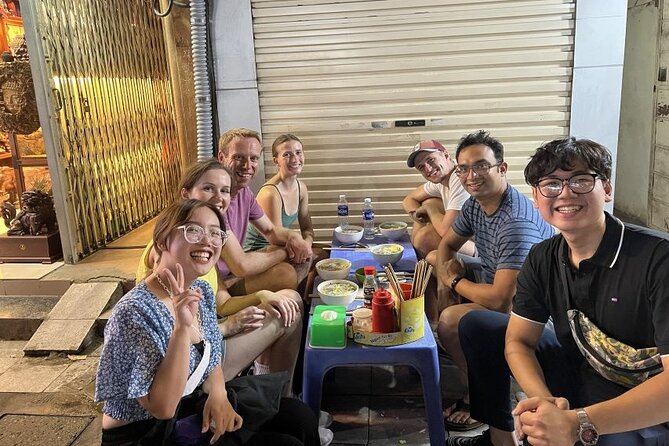
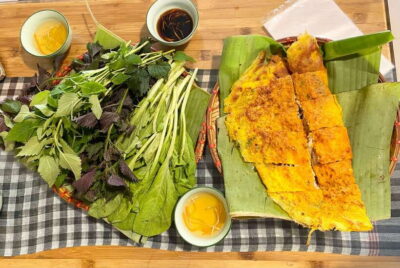
The exact order can vary, but the food selection covers a good range of textures and flavors. You may try spring rolls and pho rolls, along with pillow cake, shrimp cake, sweet donuts, or deep-fried fermented pork. These are served with raw vegetables and fish sauce, giving you the chance to see how fresh greens and dipping sauces balance fried or savory foods.
Spring rolls are familiar to many visitors, but pho rolls offer a different way to experience the flavors associated with pho. Instead of a bowl of soup, the ingredients are wrapped and eaten in a more portable form. The contrast helps you understand how Vietnamese cooking reworks the same basic ingredients into different formats.
The walk then moves to a signature Hanoi dish: mixed pho. This is not the usual soup. It is served with a special sauce, creating a drier preparation with a stronger focus on noodles, toppings, and seasoning. If you already know pho as a fragrant broth, this version gives you a useful comparison.
Banh mi brings another change. The sandwich includes pate, and it is served as part of the tasting route rather than as a full meal by itself. The Old Quarter setting makes this kind of food particularly fitting, since banh mi is designed for quick, convenient eating.
The final sweet note is chè, a traditional Vietnamese dessert. Chè can refer to a wide family of sweet dishes, and the exact preparation is not specified here. Treat it as a chance to finish the route with something different from the fried snacks and savory noodles.
You should not assume every listed item appears in one fixed sequence or in identical portions. The experience promises five tastings, while the food list gives a range of possible dishes. If you have strong dietary restrictions, ask before booking, since the supplied details do not list vegetarian substitutions, allergy handling, or ingredient changes.
Why the food walk is worth your morning
A guided tasting is useful in Hanoi because menus and food stalls can be hard to decode when you are new to the city. You may recognize the names of pho and banh mi, but the route also points you toward dishes that are less obvious to order on your own.
I especially like the mix of well-known and unfamiliar food. A first-time visit should include pho and banh mi, but a good introduction should not stop there. Pillow cake, shrimp cake, sweet donuts, and fermented pork give you a wider sense of local snack culture.
The tour also avoids making food the only subject. Your guide explains traditions and customs as you go, so you get more than a checklist of dishes. The small group should help if you want to ask what you are eating or how a sauce is meant to be used.
There is one practical limitation. A walking food tour is not the same as a full sit-down lunch. If you arrive hungry, the five tastings may feel generous, but you may still want an additional meal later. Extra food and drinks are not included.
More street food tours in Hanoi:
- Small Group Hanoi Street Food Tour with a Real Foodie
★ 5.0 · 4,682 reviews - Hanoi: Street Food Tour with Train Street & Hidden Alleyways
★ 5.0 · 2,831 reviews - Hanoi: Guided Street Food Tour with Train Street Experience
★ 4.9 · 2,479 reviews - [HOT] Hanoi Old Quarter Walking Street Food – Small Group Tour
★ 5.0 · 2,163 reviews
Cafe Minh and the coffee lesson
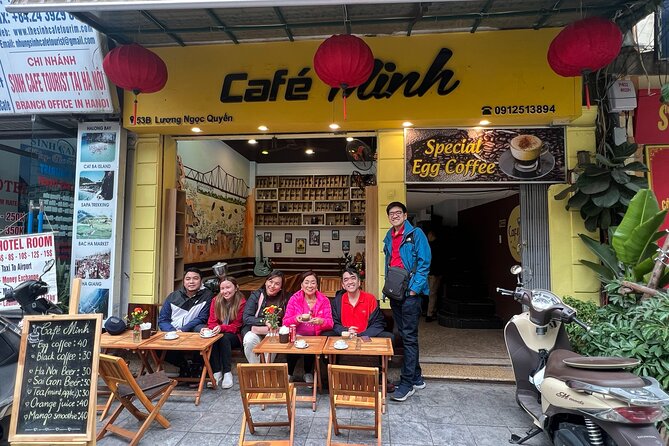
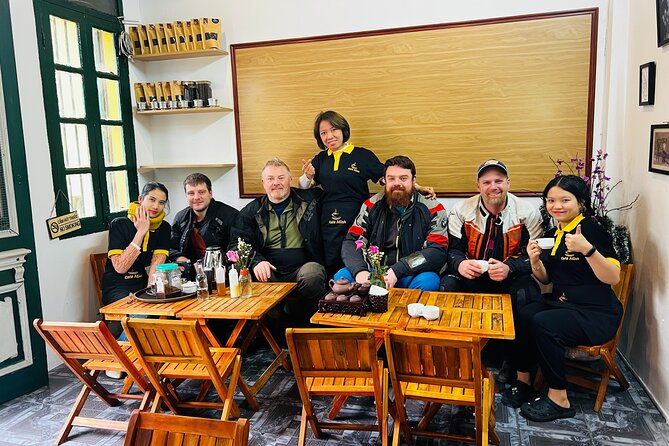
The coffee portion takes place at Cafe Minh, at 53 Luong Ngoc Quyen, only a short distance from Ta Hien Beer Street. This is a central Old Quarter location, and the class ends there.
The instructor starts with the history and culture of Vietnamese coffee before you prepare the ingredients. Then you work step by step through the process. This practical approach is the heart of the experience. You are not simply handed a finished drink. You take part in making it.
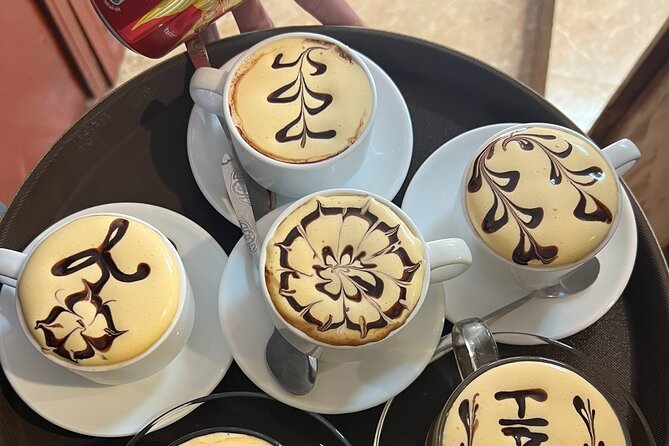
Egg coffee is the main attraction. It is labor-intensive, which explains why a good cup can feel like a small piece of kitchen craft rather than just another cafe order. The class shows you the method behind the sweet, creamy topping and lets you taste the result you helped prepare.
The listed coffee recipes include:
- Vietnamese egg coffee
- Hanoi-style espresso-strength milk coffee
- Saigon-style milk coffee, which is described as a little sweeter
The exact number of coffees can vary. The class description names three styles, while several class accounts describe making as many as six types. Devin is repeatedly associated with the lesson, and David is also named as an instructor. Tu or Kelvin is associated with a food-focused experience. Since the information gives several instructor names, your teacher may depend on the date and assigned session.
That variation is worth noting, but it does not change the main benefit: you get a guided lesson rather than a demonstration from across the room. Devin is described as fluent in English, detailed, friendly, and willing to answer questions about coffee history. Those qualities matter in a class where timing and technique affect the final drink.
What you take away from the class
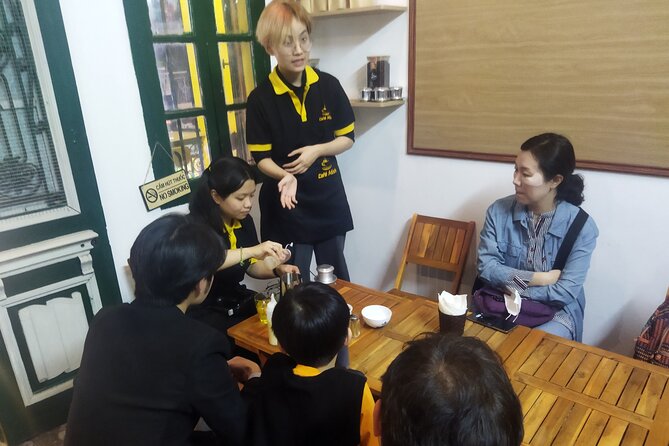
The coffee class is particularly good for anyone who wants to repeat the experience at home. Recipes for six coffee types have been provided in some sessions, and a small gift is included after the class. The equipment and ingredients are supplied, so you do not need to bring anything beyond your interest and perhaps a notebook.
You will also learn that Vietnamese coffee is not one single drink. The Hanoi and Saigon versions differ in sweetness and style, while egg coffee adds a separate technique and texture. Sampling several preparations side by side makes those differences easier to remember.
For solo visitors, the class has another practical benefit. The group size is limited to eight, and the shared preparation gives you a natural way to meet other people. One class account specifically describes making friends as a solo visitor. That is not a promise of a particular group dynamic, but the format is more social than sitting alone at a cafe.
The class lasts about one hour. That is enough time for a focused lesson, but not so long that it takes over your day. If you want an in-depth barista course, this is too short. If you want to understand three or more classic Vietnamese coffees and learn how to make them, it is a sensible introduction.
Timing, pickup, and meeting points
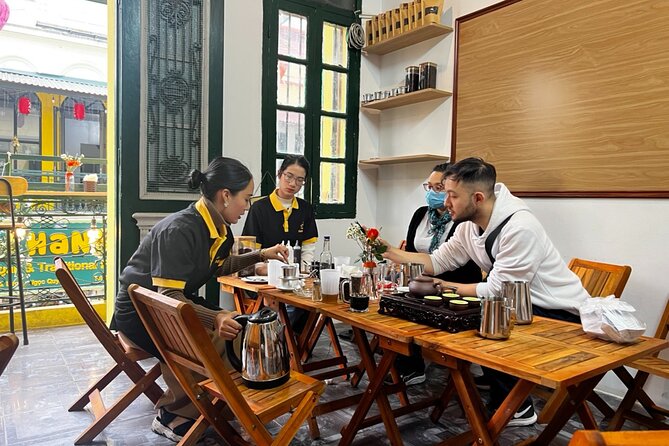
Hotel pickup is available from hotels in Hanoi’s Old Quarter. If your accommodation is outside that area, pickup is not included. You should go instead to the provider’s office at 72 Tran Nhat Duat, Hoan Kiem, Hanoi, with the supplied information noting a 7:30 AM arrival for that arrangement.
The walking tour begins at 47 P. Hang Bong. The coffee class ends at 53 B P. Luong Ngoc Quyen. These locations are both in or near the Old Quarter, but they are not the same address, so allow time to follow the guide between activities if your booking combines them in sequence.
The experience is mobile-ticket friendly, and confirmation is provided at booking. Children must be accompanied by an adult. Public transportation is nearby, and most people can participate, though the walk involves being on your feet for around three hours.
The cancellation policy is straightforward: cancel at least 24 hours before the local start time for a full refund. Cancellations or changes made within 24 hours are not refunded or accepted.
Who gets the most from this experience
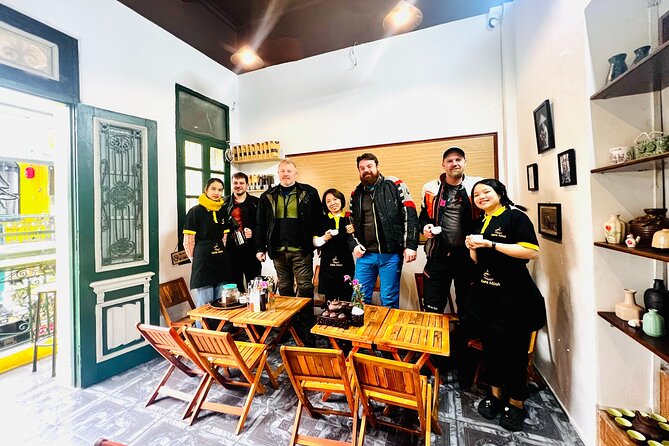
I would choose this for a first visit to Hanoi, especially if you want a quick introduction to two central parts of local life: street food and coffee. It suits people who like to taste several things rather than spend the whole morning at one restaurant.
It is also a good match for coffee lovers who want more than a famous drink in a pretty cup. The hands-on lesson gives you a method, cultural context, and recipes. Devin, David, or another assigned instructor may teach the session, with the available accounts pointing to clear English instruction and plenty of questions.
Families can book, provided children are accompanied by an adult. Couples and small groups will find the eight-person limit comfortable. Solo visitors may like the social setup, though the experience is still centered on food and instruction rather than a dedicated nightlife outing.
You should think twice if you need strict control over ingredients. The supplied details do not explain vegetarian, vegan, gluten-free, dairy-free, or allergy accommodations. You should also skip it if you want a quiet, slow restaurant meal, since the food section is a walking tasting route.
Should you book the Hanoi coffee and food tour?
Book it if you want a compact, practical introduction to Hanoi’s food culture, with enough tasting to keep the walk interesting and enough instruction to make the coffee lesson useful. The strongest reasons are the small group, the five food samples, and the chance to prepare egg coffee rather than simply order it.
The $36 price is reasonable when you count the guide, tastings, ingredients, equipment, pickup within the Old Quarter, and small gift. Before paying, confirm the start time, the exact instructor, and how the three-hour walk connects with the one-hour class. If those details suit your day, this is a smart choice for curious eaters and coffee drinkers who want something they can repeat at home.
FAQ
How long does the Hanoi Egg Coffee Class and Street Food Walking Tour last?
The experience lasts approximately three to four hours. The Old Quarter food walk is listed at three hours, and the coffee class lasts about one hour.
What food is included?
The tour includes five street-food tastings. Possible foods include spring rolls, pho rolls, pillow cake, shrimp cake, sweet donuts, deep-fried fermented pork, mixed pho, banh mi with pate, and chè.
What coffees will I learn to make?
The listed recipes include Vietnamese egg coffee, Hanoi-style espresso-strength milk coffee, and sweeter Saigon-style milk coffee. Some sessions have taught up to six coffee types, so the exact selection can vary.
Where does the coffee class take place?
The class takes place at Cafe Minh, at 53 B P. Luong Ngoc Quyen, near Ta Hien Beer Street in Hanoi’s Old Quarter.
Is hotel pickup included?
Pickup is included for hotels in Hanoi’s Old Quarter. If you stay outside the Old Quarter, you must go to the office at 72 Tran Nhat Duat in Hoan Kiem instead.
How large is the group?
The activity has a maximum of eight participants.
Can I cancel for a full refund?
Yes. You must cancel at least 24 hours before the experience start time, based on local time, to receive a full refund. Changes or cancellations within 24 hours are not accepted or refunded.
Newly added plates around Hanoi
- Hanoi Street Food Tour and MORE★ 5.0 · 18 reviews
- Hanoi Vespa After Dark Street food + Train Street+ Live Music★ 5.0 · 18 reviews
- Walking Street Food Tour and Hidden Music★ 4.5 · 19 reviews
- Street Food by Walking Tour for 3 hours in Hanoi, Vietnam★ 5.0 · 26 reviews
- TASTE OF HANOI – walking street food adventure★ 5.0 · 94 reviews
- Street Food Tour Hanoi By Walking★ 5.0 · 3 reviews
- Street food on foot with a local-Asian Promise★ 5.0 · 19 reviews
- Private Street Food Tour Adventure in Hanoi★ 5.0 · 2 reviews
Coffee Experiences, compared.

Hanoi Jeep Night Street Foodie Tour, Train Street and Egg Coffee
Read our review →
Discover Hanoi’s Street Food by Night & Mini Class Coffee
Read our review →
Ho Chi Minh Street Food Tour and Vietnamese Coffee
Read our review →
Walking Tour in Hanoi Old Quarter with Street Food & Coffee
Read our review →
Hanoi Street Food, Coffee Tastings, Alleys Walking Tour
Read our review →
Sai Gon Special Coffee At Landmark 81 & Street Food tour
Read our review →Browse the lists this tour appears in